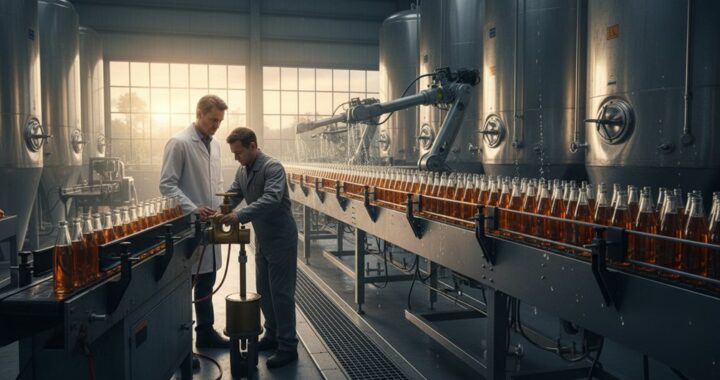

You can scale craft beer production without compromising quality by aligning brewhouse, fermentation, and packaging capacity with realistic demand, including cleaning and maintenance time. Qualify suppliers, test incoming ingredients, and standardize recipes and operating procedures. At larger volumes, control temperature, gravity, oxygen, and pressure against defined limits. Train every brewer, calibrate instruments, and combine sensory panels with lab checks. Protect freshness through careful packaging, storage, and distribution, while tracking batch data to catch drift early. The sections ahead explain how to put these controls into practice.
Plan for Scaling Craft Beer Production
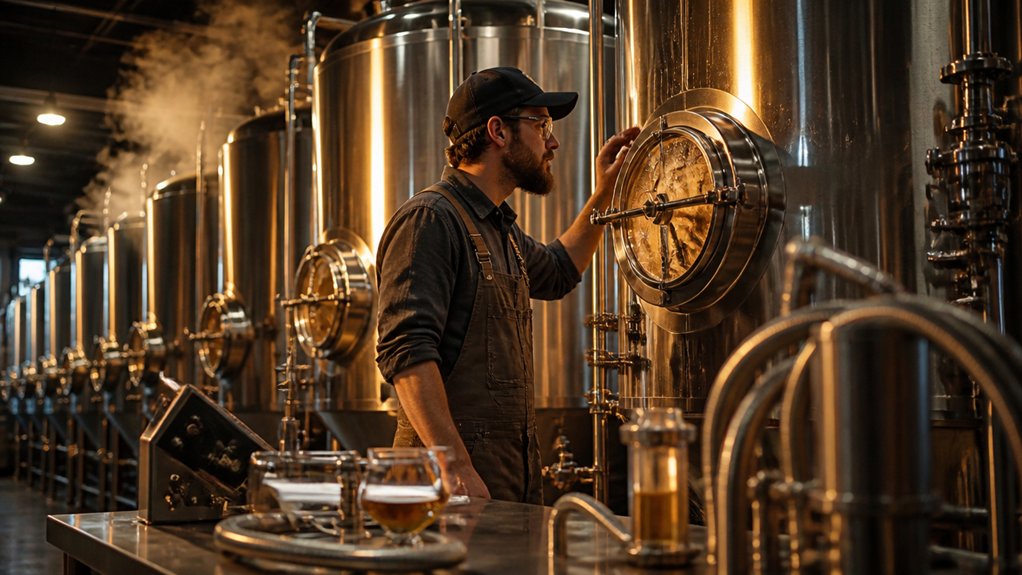
Scaling craft beer production requires more than adding fermenters; you need to expand capacity without compromising recipe consistency, quality, or cash flow. Begin by mapping your current process, from ingredient receiving through packaging, and identify constraints such as tank turnaround, cold storage, labor, or utilities. Use production records to locate recurring delays and quality deviations before investing in equipment. Then build a phased plan that accounts for commissioning time, staff training, maintenance, and working capital. Standardize recipes, operating procedures, and quality checks so each batch remains reproducible as volume rises. Review supplier reliability and ingredient lead times, and establish contingency plans for shortages. Coordinate growth with sales forecasts, using Innovative marketing and community engagement to strengthen demand without overpromising availability. Set measurable milestones and review them regularly; adjust the plan when costs, process performance, or customer response changes.
Match Brewing Capacity to Production Goals
Before purchasing equipment, translate your production goals into required brewhouse turns, fermentation capacity, and packaging throughput. Estimate annual volume by style, then map demand to tank occupancy, batch size, and realistic cellar turnaround. Your brewhouse shouldn’t outpace fermentation, and packaging shouldn’t bottleneck finished beer. Include cleaning, maintenance, and seasonal peaks in utilization assumptions; theoretical capacity rarely matches sellable output.
Choose vessel sizes that support both core releases and smaller experimental batches without forcing inefficient schedules. Align packaging speed and format flexibility with distributor orders, taproom demand, and shelf-life targets. Use sales forecasts and Customer engagement data to refine the production mix, while protecting branding consistency across every format. Build a modest capacity buffer for growth, but avoid oversized systems that tie up capital or pressure your team to brew beyond quality controls. Reassess constraints as demand changes.
Source Ingredients for Consistent Beer
To keep each batch on spec, select malt, hops, yeast, and water that meet defined quality parameters. You’ll reduce variation by qualifying suppliers and tracking lot-to-lot consistency. Test each ingredient on receipt so you can catch deviations before they affect fermentation or flavor.
Selecting Quality Ingredients
Consistent beer starts with ingredients that meet defined specifications, not merely those that seem fresh or affordable. When you select malt, evaluate moisture, color, extract potential, and protein against your recipe’s requirements. For hops, assess alpha-acid content, oil profile, harvest condition, and storage integrity; these factors shape bitterness and aroma. Choose yeast for its attenuation, flocculation, and flavor characteristics, then verify viability before pitching. Test brewing water for mineral composition, alkalinity, and contaminants, adjusting it to suit your target style. Organic certification can support a specific production claim, but it doesn’t replace sensory and analytical checks. Local sourcing may reduce transit time and connect you with regional crops, yet you should judge each lot by measurable quality. Document acceptance criteria and reject ingredients that fall outside them before they reach production.
Maintaining Supplier Consistency
Once you’ve set ingredient acceptance criteria, reliable suppliers help keep each lot within those limits. Strong Supplier relationships give you early notice of crop shifts, processing changes, and transport disruptions that could alter malt, hops, or yeast performance. Share your specifications, forecast volumes, and brewing calendar so partners can plan production and reserve suitable lots. During ingredient sourcing, assess suppliers for traceability, regional risk, storage practices, and capacity—not price alone. Agree on how they’ll communicate substitutions or process changes, and document approved varieties, harvests, and product formats. Long-term agreements can stabilize availability, but retain qualified alternatives to reduce exposure to shortages without changing recipes unexpectedly. Review delivery performance and brewing outcomes together; this feedback helps you refine purchasing plans and protect flavor, fermentation behavior, and production schedules as your brewery scales.
Testing Each Ingredient
Even qualified suppliers can deliver lots that vary, so test each ingredient against your acceptance criteria before it enters production. For malt, measure moisture, color, extract potential, and signs of mold or infestation. For hops, verify alpha-acid content, aroma, age, and storage condition; adjust recipes when potency differs. Test brewing water for pH, alkalinity, mineral balance, and contaminants, then confirm yeast viability and purity with a cell count and microscopy.
Document methods, results, lot numbers, and release decisions in your quality system. This data links Ingredient sourcing to measurable performance, helping you trace flavor shifts to specific inputs rather than guess at causes. Set clear limits and quarantine out-of-spec lots; don’t blend them into production without approval. Consistent sampling and calibrated instruments make Quality assurance repeatable as your brewery scales.
Control Fermentation at Larger Volumes
As fermentation volumes grow, heat removal, mixing, and yeast performance become harder to control because larger tanks develop stronger temperature gradients and slower circulation. You’ll need to size cooling capacity for peak metabolic heat, not average demand, and place temperature probes where they reveal gradients rather than merely confirm set points. Adjust jacket zones and coolant flow to prevent warm regions from accelerating attenuation or stressing yeast.
Fermentation dynamics also shift as hydrostatic pressure rises, affecting yeast growth, ester formation, and carbon dioxide release. You can preserve the intended profile by matching strain, pitch rate, oxygenation, and pressure conditions to vessel geometry. Yeast management starts with consistent propagation and careful transfer: distribute viable cells evenly, limit oxygen after pitching, and avoid unnecessary agitation. Track fermentation progress through temperature and gravity trends, then make controlled adjustments to cooling or pressure before deviations compound. This approach protects flavor while improving batch consistency.
Standardize Sensory, Lab, and Process Checks
You’ll get more reliable release decisions when you standardize sensory evaluations with defined descriptors, reference samples, and scoring criteria. Track lab results and process checks—such as gravity, pH, temperature, and dissolved oxygen—against batch-specific limits. Consistent records help you spot variation early and link sensory outcomes to measurable production conditions.
Standardize Sensory Evaluations
Standardize sensory evaluations so each tasting produces comparable, actionable results. Define a written protocol covering sample temperature, glassware, pour volume, serving order, and tasting conditions. Use coded samples and randomized presentation to limit brand expectations and order effects. Ask trained tasters to assess aroma, flavor, mouthfeel, bitterness, and defects against shared descriptors and reference standards.
Schedule sensory calibration sessions before routine panels. Have your team taste benchmark beers and discuss differences until evaluators apply descriptors consistently. Record individual scores before discussion, preserving independent judgments and revealing disagreement. Set clear acceptance ranges for key attributes, but investigate meaningful variation rather than averaging away useful signals. This discipline supports Flavor consistency across batches and helps you detect drift before customers notice it. Review protocols periodically, retrain when scores diverge, and keep evaluations focused on beer quality, not personal preference.
Track Lab and Process Checks
Track lab and process checks with a shared schedule, defined methods, and documented limits so deviations surface before they affect finished beer. Assign each check to a role and record results against the relevant batch, tank, and production stage. Verify pH meters, thermometers, dissolved oxygen meters, and other instruments through routine Sensor calibration; log standards, dates, and corrective actions. Use consistent sampling points and handling procedures to reduce measurement noise. Monitor fermentation temperature, gravity, pH, carbonation, and packaged-beer oxygen against approved ranges, escalating out-of-limit results before release. Apply Data analytics to identify trends across batches, shifts, and equipment, not just isolated failures. Review exceptions with production and quality teams, confirm root causes, and document follow-up. This disciplined feedback loop helps you scale output while preserving sensory targets and process control.
Train Every Brewer on the Same SOPs
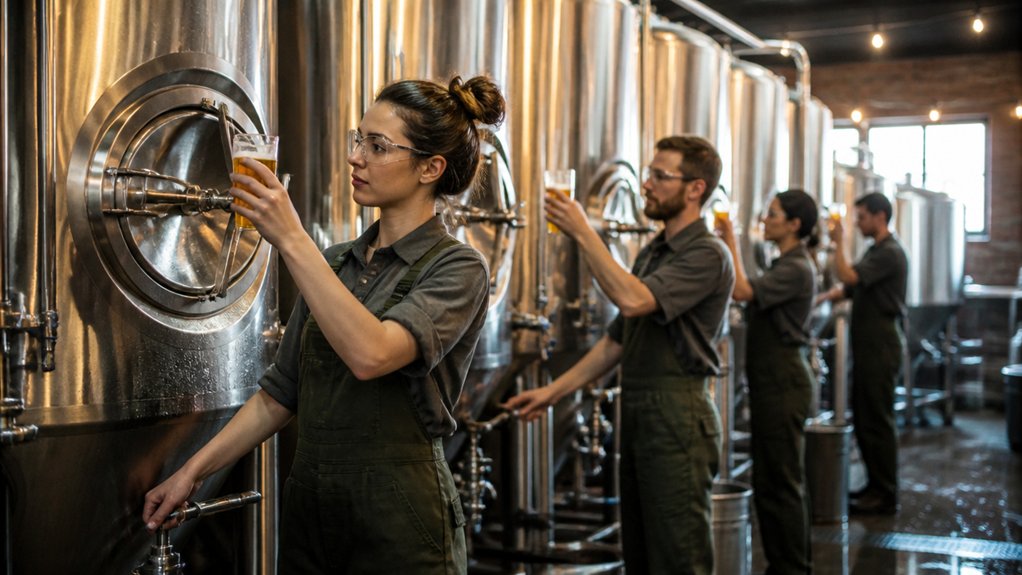
When every brewer follows the same standard operating procedures (SOPs), your team can repeat critical steps consistently across shifts. Effective Brewer training turns written instructions into reliable habits, reducing variation in milling, mashing, lautering, and fermentation control. Teach each procedure at the equipment where brewers will perform it, then verify understanding through observed practice rather than sign-off alone. Include critical limits, measurement methods, decision points, and escalation steps so operators know what to do when readings fall outside target ranges. Use version-controlled SOPs, and document revisions so no one relies on outdated instructions. Schedule refreshers when processes, equipment, or recipes change, and assess competency across all shifts. Strong SOP consistency doesn’t eliminate brewer judgment; it gives your team a shared baseline for making informed adjustments and documenting them accurately.
Protect Flavor in Storage and Packaging
Consistent brewing practices set the baseline; storage and packaging determine how well your beer keeps its intended flavor. Control cellar temperature and limit light exposure to slow oxidation and prevent skunky notes. Minimize oxygen pickup during transfers, tank purging, and filling; even small amounts can dull hop aroma and shorten shelf life. Use dissolved-oxygen measurements to verify your process, not just equipment settings.
For effective Flavor preservation, match package choice to the beer’s sensitivity and expected storage conditions. Specify oxygen-barrier materials, reliable seams, and closures that maintain a tight seal. Packaging innovations such as cans, oxygen-scavenging closures, and improved barrier liners can reduce exposure, but validate them with routine checks. Keep filled packages away from heat and light in your facility, and use sensory panels alongside analytical testing to catch flavor drift before release.
Keep Distribution Fresh as You Scale
As distribution expands, protect freshness by controlling time, temperature, and handling from the brewery to the point of sale. Set delivery windows that limit transit time, and use refrigerated transport for styles sensitive to heat. Define acceptable temperature ranges with carriers, then verify that vehicles and storage areas meet them. Choose routes and partners that minimize delays, rough handling, and prolonged warehouse stays. Innovative packaging, such as oxygen-scavenging liners or light-blocking materials, can help preserve flavor when conditions vary, but it can’t replace cold-chain discipline. Match shipment size to sales velocity so retailers don’t hold more beer than they can sell fresh. Train distributors to rotate stock using first-expiring, first-out practices and keep kegs chilled. Use Customer feedback to identify freshness issues at the point of sale and improve delivery practices.
Track Batch Data to Spot Quality Drift
Fresh distribution protects beer after it leaves the brewery; batch records help you catch quality drift before it reaches the tank. For every brew, log malt lots, water chemistry, yeast generation, pitch rate, fermentation temperature, pH, gravity, and packaging conditions. Record measurements at consistent process points so you can compare batches reliably.
Use control charts or simple trend reports to flag gradual shifts that single readings might miss. If attenuation changes, for example, check yeast health, oxygenation, and temperature before adjusting the recipe. Link sensory panel notes to analytical results; rising bitterness or altered aroma may reveal ingredient variation or process changes.
This disciplined Quality assurance system supports Flavor consistency as production grows. Set alert limits, assign owners for investigations, and document corrective actions. Review trends across tanks and seasons, then verify each fix in subsequent batches. You’ll make decisions from evidence, not memory, and protect your target profile.