
In health beverage manufacturing, you need controls at every stage because ingredient, process, and storage changes can affect safety, flavor, nutrients, and shelf life. Qualify suppliers, verify ingredients, follow approved processing procedures, and use sanitation and environmental monitoring to prevent contamination. Test products with validated microbiological, chemical, physical, and sensory methods, then protect them through suitable packaging and storage. Accurate labels and traceable lot records strengthen compliance and recall readiness. The sections below explain how to put these safeguards into practice.
What Makes Beverage Quality Challenging?
Beverage quality is challenging because small changes in ingredients, processing, or storage can affect safety, flavor, texture, and shelf life. In health beverages, you often combine sensitive nutrients, proteins, botanicals, and acids, each of which can respond differently to heat, oxygen, light, or pH shifts. These interactions may cause sediment, separation, color changes, or nutrient loss, even when the product looks acceptable at filling.
You need to control mixing, thermal treatment, filling, and packaging conditions to limit microbial risks and preserve product consistency. Flavor stability also demands attention: oxidation and ingredient interactions can create off-notes during distribution. Testing under realistic storage conditions helps you identify failure points, confirm shelf life, and set practical specifications. Because formulation and processing choices interact, you should assess the finished beverage as a complete system.
How to Qualify Ingredient Suppliers
To qualify ingredient suppliers, verify their credentials, including relevant certifications, licenses, and audit records. Assess their quality systems by reviewing documented controls, testing practices, and corrective-action procedures. These checks help you confirm that suppliers can consistently meet your specifications and regulatory requirements.
Verify Supplier Credentials
Before approving an ingredient supplier, verify that its credentials match your product’s quality and safety requirements. Confirm its legal business name, operating address, and required licenses against current records. Check whether certifications apply to the specific facility, ingredient, and production scope you’ll use; don’t rely on logos or expired certificates. Request documentation supporting ingredient identity, origin, allergen status, and applicable regulatory compliance. For imported materials, verify relevant import registrations and traceability records. Use credential verification to identify gaps, then resolve them with the supplier before purchase. Where risk warrants, conduct supplier audits or use qualified third-party auditors to validate claims and inspect relevant records. Document your checks, dates, evidence, and approval rationale. Reverify credentials periodically and whenever ownership, manufacturing sites, ingredient sources, or regulatory requirements change.
Assess Quality Systems
A supplier’s quality system shows how consistently it controls ingredient safety and specifications. When you assess it, review documented procedures for approval, testing, traceability, change control, and corrective actions. Ask for recent audit reports, certificates of analysis, and evidence that the supplier investigates deviations and verifies fixes. Check whether testing methods suit the ingredient’s risks and whether results meet agreed limits for identity, potency, contaminants, and microbiological hazards.
You should also examine how the supplier manages variability across batches. Reliable controls support Flavor consistency and help you maintain predictable product performance. Review storage conditions, transport monitoring, and lot records to confirm materials remain within specification through delivery. Assess Packaging integrity controls, including seal checks and damage handling, because compromised containers can expose ingredients to moisture or contamination. Confirm that you can access records promptly and that the supplier notifies you before process or source changes. Define acceptance criteria and reassess performance routinely.
How to Prevent Contamination in Production
You can reduce contamination risk by enforcing documented sanitation and hygiene practices across production areas. Sterilize equipment using validated procedures, and verify that each cycle meets defined limits. Monitor environmental and product samples so you can detect contamination trends and act promptly.
Sanitation and Hygiene
Effective sanitation and hygiene controls prevent pathogens, spoilage organisms, and allergen residues from contaminating health beverages during production. You should establish written Sanitation protocols that define cleaning frequency, approved chemicals, contact times, and verification methods for each production area. Match procedures to product risks, including allergens, high-moisture ingredients, and ready-to-drink formulations. Train employees in Hygiene practices, such as effective handwashing, clean protective clothing, illness reporting, and controlled movement between zones. Keep food-contact surfaces and nearby work areas clean, and prevent raw materials, waste, and personal items from creating cross-contamination routes. Use scheduled inspections, environmental monitoring, and documented corrective actions to identify gaps and confirm controls work. Review records and trend findings regularly; adjust procedures when products, processes, or contamination risks change. Clear accountability helps you sustain compliance and protect consumers.
Equipment Sterilization
After cleaning removes soil and residues, equipment sterilization reduces viable microorganisms on product-contact surfaces to a validated level. You should select Sterilization techniques that suit your beverage, equipment design, and process limits. Options may include moist heat, chemical agents, or validated filtration for compatible components. Follow established time, temperature, concentration, and contact-time parameters; deviations can compromise microbial control or product quality. Confirm sterilants reach valves, seals, transfer lines, and other hard-to-access areas, and verify that residues are removed when required. Document cycle settings, load configuration, and release criteria so operators can reproduce the validated process. Equipment maintenance supports reliable sterilization: inspect seals, welds, and surfaces for damage that could shelter microorganisms or impede treatment. Train staff to follow procedures, protect sterile components during assembly, and prevent recontamination before production begins. Review validation whenever equipment or process conditions change.
Contamination Monitoring
How can you detect contamination before it affects a batch? Build a monitoring plan around product risks, process steps, and supplier controls. Test incoming water and ingredients for chemical hazards, including pesticide residues, using validated methods and risk-based sampling. Verify that suppliers provide current certificates of analysis, but confirm critical results through independent testing.
During production, collect samples from defined points and use environmental swabs to track microbial contamination on food-contact surfaces and in high-risk zones. Apply rapid screening where it can guide immediate action, then confirm presumptive positives with accredited laboratory methods. Set alert and action limits, document results, and trend findings to identify recurring sources.
If a result exceeds limits, hold affected product, investigate the root cause, and verify corrective actions before release. Review your monitoring plan whenever ingredients, equipment, or processes change.
How to Control Formulation and Processing
To keep every batch consistent, control formulation and processing through defined specifications, calibrated equipment, and documented checks. Set target weights, ingredient ranges, mixing order, and processing parameters before production. Use controlled recipes and verified scales so operators can measure each component accurately. Track lot numbers and supplier changes to protect ingredient stability, especially when active compounds or natural flavors vary. Standardize water quality, temperature, mixing time, and shear; small deviations can alter solubility, texture, or nutrient retention. Confirm that equipment settings match the approved process, and record adjustments with reasons and authorization. Schedule changeovers carefully to prevent carryover between formulations. Review batch records for trends, then correct root causes rather than symptoms. These controls support flavor consistency and reproducible product performance without relying on end-stage testing alone.
Which Tests Verify Beverage Safety and Consistency?
Even with controlled formulation and processing, you need testing to verify that each beverage meets safety limits and quality specifications. Begin with microbiological tests for relevant pathogens, yeast, and mold, using validated methods and defined sampling plans. Chemical analysis can confirm pH, acidity, nutrient levels, and compliance with contaminant limits. Check soluble solids, viscosity, and fill volume against product specifications to detect variation between batches. Use Sensor calibration to keep pH meters, refractometers, and other instruments accurate; document calibration and corrective actions. Sensory evaluation helps you identify changes in flavor, aroma, color, and mouthfeel, but it shouldn’t replace analytical testing. Set acceptance criteria before production, test representative samples, and review results against trends. When a result falls outside limits, hold the affected batch, investigate the cause, and verify corrective action before release.
How to Protect Quality in Packaging and Storage
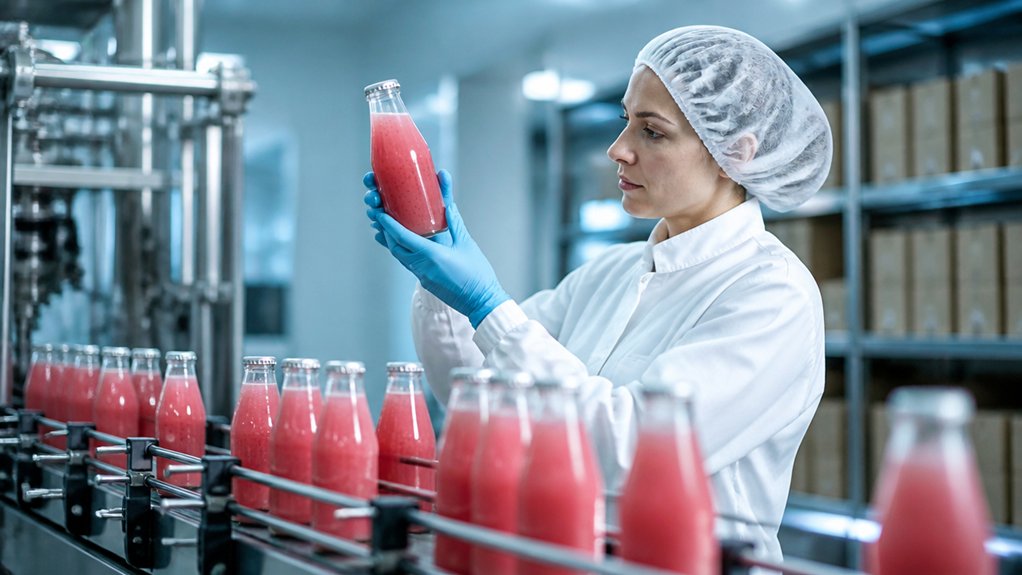
Once a beverage passes testing, packaging and storage must preserve the quality you’ve verified. Choose containers that limit oxygen, light, and moisture exposure, since these factors can degrade nutrients, flavor, and color. Match the package material to your formula’s acidity, processing method, and shelf-life target; compatibility testing can reveal interactions before production.
Innovative packaging, such as high-barrier bottles or oxygen-scavenging closures, can reduce deterioration when validated for your product and filling line. Check seals, closure torque, and fill levels during runs, and retain samples to monitor performance over time.
Control Storage conditions from dispatch through distribution. Set temperature and humidity limits based on stability data, and use calibrated monitoring devices to identify excursions. Protect cases from sunlight, heat, and physical damage. Document inspections and corrective actions so you can trace risks and maintain consistent quality.
How to Get Beverage Labels and Claims Right
Accurate beverage labels start with verified formulation and testing data. Confirm that ingredient amounts, serving sizes, and nutrition values match your finished product and applicable regulations. Use validated analytical methods and review supplier specifications before you approve label copy.
Your Marketing claims must be truthful, specific, and supported by reliable evidence. Don’t imply disease prevention or treatment unless regulations permit the claim and you have the required substantiation. Check nutrient and structure-function statements against current rules, and retain records supporting each claim.
Treat Label design as a quality control step, not just a creative exercise. Make required disclosures legible, place them correctly, and assure contrast and type size meet applicable standards. Have regulatory and quality staff review every version before printing. Recheck labels whenever formulas, serving sizes, or regulations change, so consumers receive accurate information and your product stays compliant.
How to Trace Products and Manage Recalls
A reliable traceability system lets you quickly identify where each beverage lot’s ingredients came from and where finished products went. Connect supplier records, receiving checks, production logs, packaging codes, and shipping data in your Traceability systems. Assign unique lot identifiers and capture quantities, dates, and destinations at each handoff. Routine mock recalls can reveal missing records and measure how quickly your team can account for affected units.
When a complaint, test result, or supplier alert signals a hazard, assess the risk promptly and define the affected lots using documented evidence. Stop distribution, notify relevant authorities as required, and contact customers through verified channels. Keep recall instructions clear, including product names, codes, and return or disposal steps. Reconcile recovered quantities, investigate root causes, and verify corrective actions before restarting. Product authentication features, such as tamper-evident seals, can help confirm package integrity.