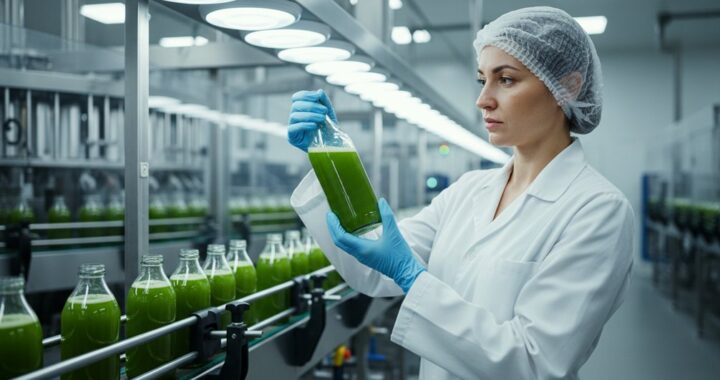
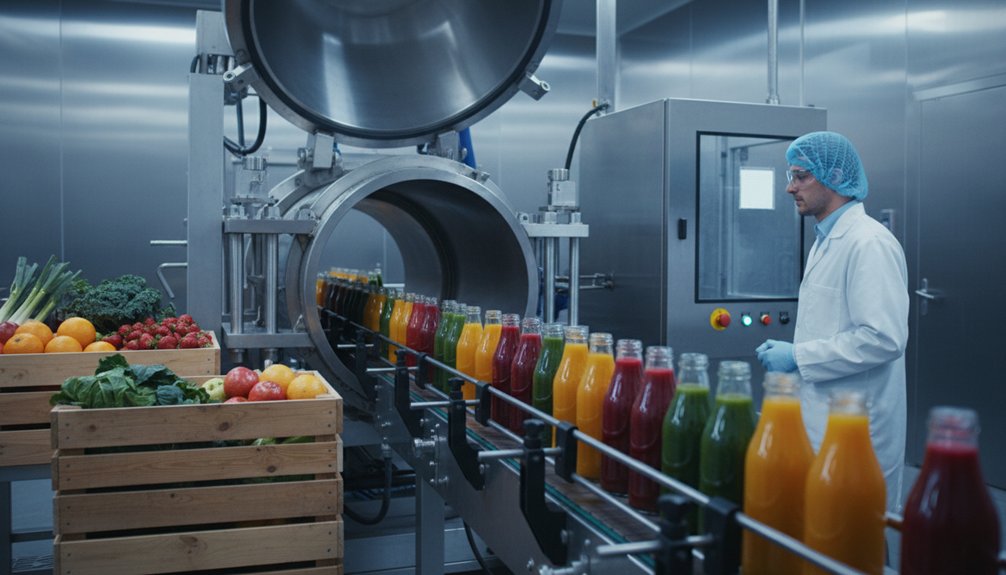
You can use high-pressure processing (HPP) to improve cold-pressed products’ microbial safety and refrigerated shelf life without heat, helping preserve fresh flavor and nutrients. To overcome manufacturing hurdles, choose flexible, pressure-compatible packaging, then validate pressure and hold time for your formulation and target organisms. Compare in-house and tolling costs, assess capacity, and coordinate production and logistics. Challenge studies and refrigerated shelf-life testing can verify safety and quality; the sections below outline the decisions that help you implement HPP with confidence.
Protect Cold-Pressed Products With HPP
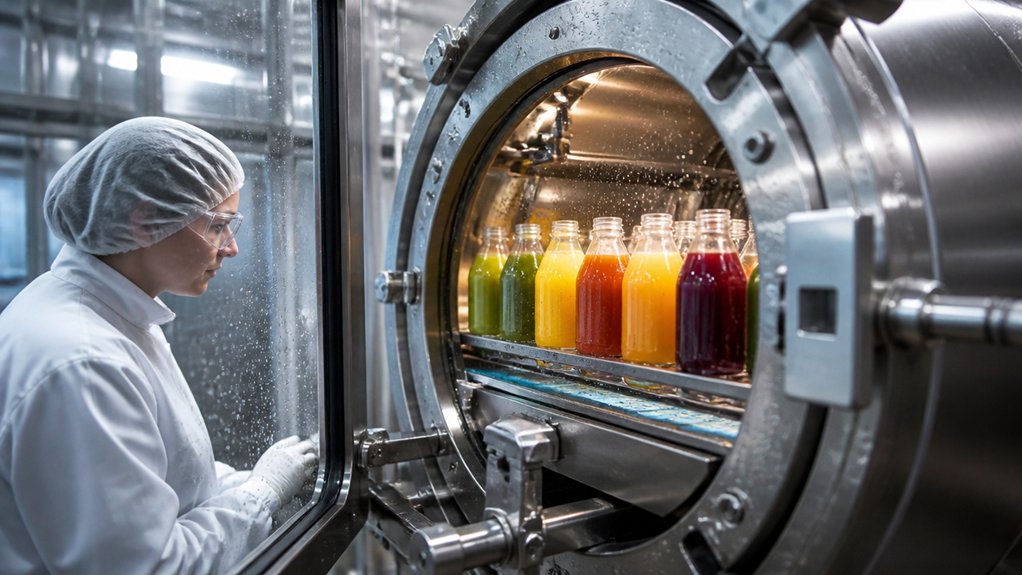
Cold-pressed juices and other minimally processed products retain fresh flavor and nutrients, but they can also support harmful microorganisms and spoilage. High-pressure processing (HPP) helps you address this risk without relying on heat. The process subjects sealed products to intense hydrostatic pressure, reducing many vegetative pathogens and spoilage organisms while limiting thermal damage. You can use HPP to improve microbial safety and extend refrigerated shelf life, provided you validate the treatment for your product, target organisms, and process conditions. Pressure resistance varies by microorganism, formulation, and storage temperature, so testing remains essential. HPP supports nutrient retention and flavor preservation compared with conventional thermal pasteurization, though outcomes depend on ingredients and pressure parameters. By integrating validated HPP into your cold-pressed production plan, you can protect product quality and strengthen food-safety controls.
Choose HPP-Compatible Packaging
Packaging must withstand HPP’s intense pressure while protecting product integrity. Choose flexible, water-resistant Packaging materials that can compress under pressure and return to shape without leaking, delaminating, or compromising seals. Common options include high-barrier polymer films and pressure-rated plastic bottles; verify each supplier’s specifications for your product and process. Avoid rigid containers, trapped air, and components that could crack or distort. Test filled packages—not just empty samples—for seal strength, oxygen and moisture barrier performance, and appearance after treatment. Confirm closure compatibility and leave appropriate headspace where needed, following equipment and packaging guidance. Check that inks, adhesives, and labels remain legible and bonded after processing. Review Labeling compliance for required information and claims, and validate label performance on the finished pack. Document supplier approvals and package testing before production.
Set HPP Pressure and Hold Time
After validating the package, set HPP pressure and hold time to achieve the required microbial reduction without compromising product quality. Choose a pressure level and treatment duration based on your product’s pH, formulation, target organisms, and applicable safety requirements. Don’t assume one recipe fits every cold-pressed beverage: solids, fat, and dissolved ingredients can affect microbial resistance and sensory outcomes.
Confirm Pressure calibration through documented checks of the vessel’s pressure measurement and control systems. Work with your HPP provider or process authority to validate the scheduled process using relevant challenge studies or accepted scientific data. Hold time optimization should balance validated lethality with retention of flavor, color, and nutrients; pressure ramp-up and decompression generally don’t count toward the specified hold unless your process authority says otherwise. Record operating conditions, verify each run, and reassess the process when formulation or package specifications change.
Plan HPP Costs, Capacity, and Workflow
Before committing to HPP, compare the cost of in-house processing with tolling fees, including packaging, freight, testing, and expected production volume. Your cost analysis should include equipment, facility modifications, labor, utilities, maintenance, and downtime. Model unit costs across realistic throughput scenarios; low utilization can make ownership uneconomical, while tolling may reduce capital exposure but add transport and scheduling constraints.
Map each production step, from filling and sealing through palletizing, treatment, and distribution. Confirm package dimensions and materials suit the processor’s vessel and basket configuration, and coordinate production runs with minimum loads and turnaround times. This workflow optimization can limit handling, idle time, and freight movements. Check available capacity, service windows, and contingency options before setting launch volumes. Align procurement, production, and logistics teams on lead times, inventory buffers, and order cutoffs so your plan reflects actual operating conditions.
Validate HPP Safety, Shelf Life, and Quality
Once costs and production logistics are mapped, validate that the HPP process delivers the required food safety and product performance. Define product-specific validation protocols with a qualified process authority, using challenge studies to assess pathogen reduction under worst-case conditions. Confirm that pressure, hold time, temperature, formulation, packaging, and initial microbial load reflect commercial production. HPP doesn’t sterilize food, so establish refrigerated storage controls and verify shelf life through microbiological testing at planned intervals. Track sensory attributes, color, texture, flavor, and nutrient retention against untreated controls and acceptance criteria. Document results to support Regulatory compliance, hazard analysis, and accurate labeling; requirements vary by product and market. Your data should show that safety targets remain met throughout shelf life while quality stays consistent. Share substantiated findings with customers to strengthen Consumer perception without overstating HPP’s benefits.