
Successful beverage brands turn strong ideas into best-sellers by solving a clear consumer need, then validating demand across retail, social, search, and foodservice channels. You’ll need reliable ingredients, an experienced manufacturer, and a formula tested for taste, safety, shelf life, and real-world use. Build a distinctive brand around a credible promise, price for sustainable margins, and launch where your target customers shop. Then use reviews, repeat purchases, and returns to improve the product and guide growth—the steps ahead show how.
Find a Real Need for Your Beverage
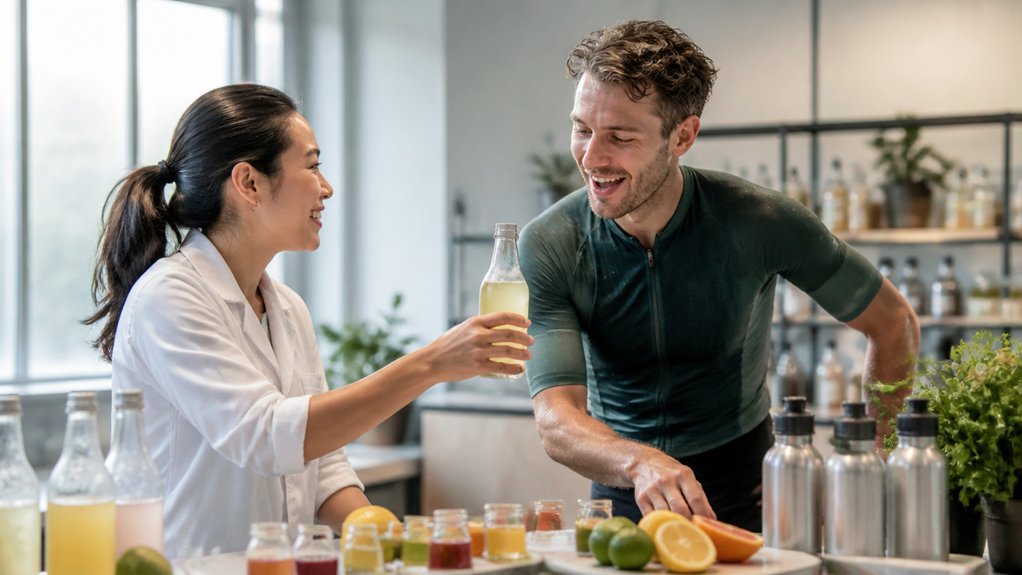
Before you develop a beverage, identify a need consumers aren’t already getting met. Look beyond crowded claims and ask what would make someone reach for your product in a specific moment: sustained energy without jitters, hydration with less sweetness, or a satisfying alcohol-free option. Tie that need to a clear use occasion and a benefit your formulation can deliver consistently. Flavor innovation can turn a familiar format into a fresh experience, but novelty alone won’t earn repeat purchases. Consider how sweetness, texture, ingredients, and aftertaste support the product’s purpose. Packaging trends can also help address practical needs, from portable formats for on-the-go routines to resealable containers that preserve freshness. Define the gap before choosing ingredients or design. When every product decision serves a real consumer need, your beverage has a sharper reason to exist.
Validate Demand With Market Research
Once you’ve identified a consumer need, market research can show whether enough people care to support a viable beverage. Start by tracking consumer trends across retail shelves, social platforms, search data, and foodservice menus. Look for sustained shifts in flavor preferences, functional benefits, formats, and price expectations—not just a viral moment. Then test your concept with target buyers through surveys, interviews, or small-scale product trials. Ask what they’d buy, how often, and what they’d pay; stated enthusiasm alone won’t predict repeat purchases. Use competitor analysis to map direct and emerging alternatives, compare claims and pack sizes, and spot gaps your product could credibly fill. Check whether shoppers understand your proposition quickly and see a clear reason to switch. These signals help you refine positioning, prioritize features, and judge whether demand merits a launch.
Source Ingredients and Find a Manufacturer
Choose ingredients that deliver consistent quality, support your formulation, and align with the trends your customers value. Then find a manufacturer with the capabilities, certifications, and production capacity your beverage needs. Check both early to keep your product on spec as you scale.
Source Quality Ingredients
Strong beverage concepts depend on ingredients that deliver consistent flavor, quality, and supply. You’ll protect your product’s identity by setting clear specifications for taste, color, texture, potency, and performance in the finished drink. Match ingredients to your positioning, whether you’re developing a low-sugar sparkling beverage, a functional hydration blend, or a botanical infusion. Review samples in realistic formulations, since acids, sweeteners, processing, and shelf life can change how ingredients taste and behave.
Look beyond price when assessing Ingredient sustainability and supplier reliability. Ask for documentation on origin, certifications, allergen controls, and quality testing, then confirm suppliers can maintain specifications as volumes grow. Check lead times, minimum orders, seasonal variability, and backup sources before finalizing your formula. Strong sourcing decisions help you manage costs, maintain consistency, and respond to shifting consumer expectations without compromising the sensory experience that sets your beverage apart.
Select a Manufacturer
The right manufacturer can turn a promising beverage formula into a consistent, scalable product. Choose a partner with proven experience in your category, whether you’re developing functional drinks, sparkling botanicals, or shelf-stable smoothies. Ask about minimum order quantities, production capacity, lead times, quality controls, and support with regulatory compliance. These details can protect your launch timeline and margins as demand grows.
Look beyond the production line, too. A manufacturer that understands Packaging innovation can help you match format, materials, and shelf appeal to your audience and distribution channels. Review its Sustainability practices, including sourcing, energy use, waste reduction, and recyclable or lightweight packaging options. Request facility tours, product samples, and references from brands at a similar stage. Align on ownership of your formula, confidentiality, and communication before signing. A clear partnership helps you scale without compromising quality or brand values.
Develop and Test Your Beverage Formula

Once you’ve defined your beverage concept, turn it into a repeatable formula that balances flavor, function, cost, and shelf stability. Work with your manufacturer to select ingredients, set target specifications, and confirm each component performs at production scale. For Flavor innovation, test trend-aware profiles—such as botanical notes, global flavors, or reduced-sugar blends—without compromising taste or ingredient compatibility.
Run bench trials, then evaluate samples with target consumers. Track sweetness, aroma, mouthfeel, aftertaste, and perceived benefits; use feedback to refine the formula, not just validate your first idea. Test pH, microbial safety, processing conditions, and shelf life under realistic storage scenarios. Confirm the formula meets regulatory requirements and remains consistent across batches. Coordinate Packaging design trials with stability testing, since light, oxygen, and material interactions can change flavor or product performance. Document approved specifications before scaling production.
Build a Beverage Brand That Stands Out
As you move from formula development to market launch, build a brand that makes your beverage easy to recognize and choose. Define a clear promise around your product’s taste, ingredients, and intended occasion. Your packaging should express that promise at a glance, with distinctive colors, legible typography, and claims you can substantiate. Align the name, visual identity, and tone of voice so customers encounter one coherent story across every touchpoint.
Use Flavor innovation to give that story substance: a novel botanical blend, familiar flavor with a modern twist, or texture that suits current preferences can create a memorable reason to try your drink. Then apply Branding strategies that help you stand apart without chasing every trend. Test concepts with target consumers, refine what feels authentic, and guarantee your brand accurately reflects the beverage inside.
Set Prices and Choose Sales Channels
Price your beverage to cover production, packaging, distribution, and retailer margins while staying credible for its category and audience. Build Pricing strategies around your product’s role: an everyday hydration staple needs a different price architecture than a functional drink with premium ingredients. Model unit economics across pack sizes, promotions, and wholesale terms before setting a suggested retail price. Check competitor benchmarks, but don’t let them erase the value your formulation and brand deliver.
Choose Distribution channels that match your margins, operational capacity, and growth goals. Direct-to-consumer sales can give you customer data and pricing control, while distributors and retail partners can extend reach and simplify logistics. Compare fees, order minimums, payment terms, and cold-chain requirements where relevant. Your channel mix should support sustainable contribution margins and reliable availability, not just headline volume. Revisit pricing and channel assumptions as costs, demand, and product mix evolve.
Launch Your Beverage Where Customers Shop
Launch where your target customers already shop, then expand as demand and operations prove out. Match each channel to your beverage’s format, price point, and use occasion. A functional drink may fit gyms and natural grocers, while a premium mixer could earn attention in specialty shops and cocktail bars. Build Retail partnerships with buyers who understand your category and can support a disciplined rollout. Before committing, confirm order minimums, delivery windows, margins, and promotional expectations so your production plan can meet retailer requirements without straining cash flow.
Treat shelf placement as part of your product strategy. Agree on where the drink will sit, how it will stand out among adjacent brands, and whether cold storage matters. Use packaging, case configuration, and launch timing to make stocking straightforward. Expand only when inventory, fulfillment, and account support can sustain broader distribution.
Use Customer Feedback to Grow Sales
Use customer feedback to identify what’s working, what’s missing, and which changes could drive repeat purchases. After launch, track reviews, retailer comments, social conversations, and support inquiries to spot patterns in flavor, format, price, and packaging. Customer testimonials can build trust, but recurring complaints often reveal the clearest product opportunities.
Create Feedback loops that connect what shoppers say to decisions your team can act on. Tag feedback by channel and customer segment, then compare it with sales, repeat-purchase rates, and returns. If buyers praise a low-sugar profile but request more portability, test a resealable format before committing to a full production run.
Share changes with customers and invite another round of input. When you show that you listen, you strengthen loyalty, sharpen positioning, and turn product improvements into compelling reasons to buy again.