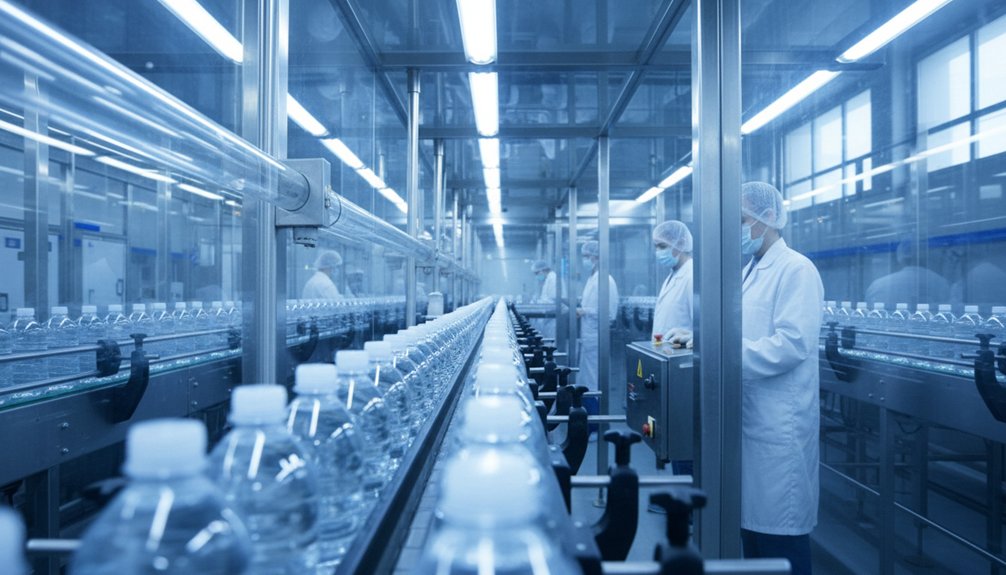
To manufacture bottled water reliably, you need to control each stage, from source to shipment. Choose a protected, dependable source, then filter and disinfect the water to meet your product goals. Test routinely for microbes, minerals, and chemical contaminants, and hold any affected batches. Prepare clean, inspected bottles, fill and seal them hygienically, and use clear lot codes for traceability. Careful storage, monitored transport, automation, and waste tracking help preserve quality and efficiency. The steps ahead explain these controls in practice.
How Bottled Water Manufacturing Begins at the Source?
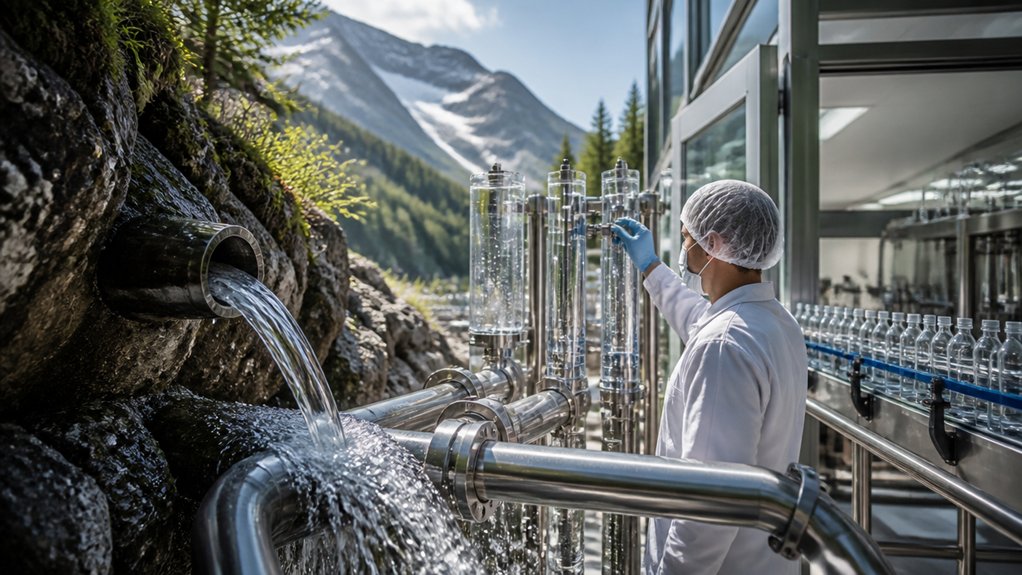
Bottled water manufacturing begins with choosing and protecting a reliable water source, such as a spring, well, or municipal supply. You’ll assess its location, yield, seasonal stability, and access before committing to production. A dependable Water source must also meet applicable safety standards and support consistent operations.
If you select a spring, examine how groundwater reaches the surface and whether nearby land use could introduce contaminants. For a well, review construction records, depth, and aquifer conditions. Municipal supplies offer established infrastructure, but you’ll still verify quality and supply agreements.
Natural filtration through soil and rock may influence a source’s mineral profile, taste, and consistency. You’ll document these characteristics and establish a protected collection area, routine source monitoring, and contingency plans. Careful source selection gives your operation a reliable foundation and helps preserve water quality before bottling begins.
How Manufacturers Treat and Filter Water?
Once manufacturers confirm a water source’s quality, they treat it to meet safety standards while preserving the desired taste and mineral profile. They’ll select methods based on the source’s characteristics and the product they plan to make. Water filtration may combine sediment filters, activated carbon, and fine membranes to remove particles, odors, and unwanted compounds. Reverse osmosis can reduce dissolved salts and other contaminants; manufacturers may then add minerals back to achieve a consistent profile. Disinfection, often with ultraviolet light or ozone, helps control microorganisms without leaving a strong taste. Each treatment step serves a defined purpose, and operators adjust equipment to maintain flow and minimize waste. You’ll find that Purity standards guide process design, while careful handling protects water quality before bottling.
How Manufacturers Test Water Throughout Production?
After treatment, manufacturers test water at multiple points to confirm that each process works as intended. You can think of these checks as safeguards: operators sample incoming water, monitor treatment stages, and verify the finished product before release. They compare results with Water quality standards and internal specifications, using validated methods to catch deviations early.
Routine measurements track pH, turbidity, conductivity, and disinfectant levels. Laboratory analyses also check for microorganisms, minerals, and chemical contaminants that quick readings can’t reliably identify. Calibrated testing equipment, such as meters, sensors, and analytical instruments, helps produce consistent, traceable results. Staff record readings, review trends, and investigate unusual values rather than relying on a single sample. If results fall outside limits, they hold affected product, identify the cause, and retest after corrective action. This disciplined monitoring helps protect consumers and maintain dependable quality.
How Bottles Are Prepared for Filling?
Before filling begins, manufacturers prepare bottles to keep contaminants out and guarantee each container meets production requirements. Your line may use preformed containers or create them on site. With on-site Bottle shaping, equipment heats plastic preforms, stretches them into molds, and blows them into the required form. Operators check dimensions, neck finishes, and wall thickness so bottles fit the line and withstand handling.
Next, you’ll see bottles inspected for cracks, deformation, residue, and other defects. Automated cameras can flag flaws, while air rinsing or another validated cleaning method removes loose particles when needed. Keep bottles protected from dust between preparation and the filler. Cap selection also happens before production: choose closures that match the bottle’s neck, material, and intended use. Confirm packaging specifications and supply enough approved components to support the scheduled run without unnecessary interruptions.
How Filling and Capping Protect Water Purity?
During filling and capping, controlled conditions help keep treated water free from contamination. You protect purity by transferring water through sanitized, enclosed lines into clean bottles, limiting contact with hands, air, and surrounding surfaces. Maintain hygienic equipment and verify that each bottle meets your facility’s cleanliness requirements before filling.
Once filled, cap bottles promptly with clean closures that fit securely. A tight seal helps prevent leaks, entry of microbes, and exposure to odors or particles during storage and transport. Check closure integrity and inspect finished bottles for damage or improper seals; remove any that fail your checks.
Follow Consumer safety standards for sanitation, handling, and product verification. If you choose Eco friendly packaging, confirm that its materials suit water contact and preserve a reliable seal. These practices help you deliver clean, protected water to consumers.
How Automation Speeds Up the Bottling Line?
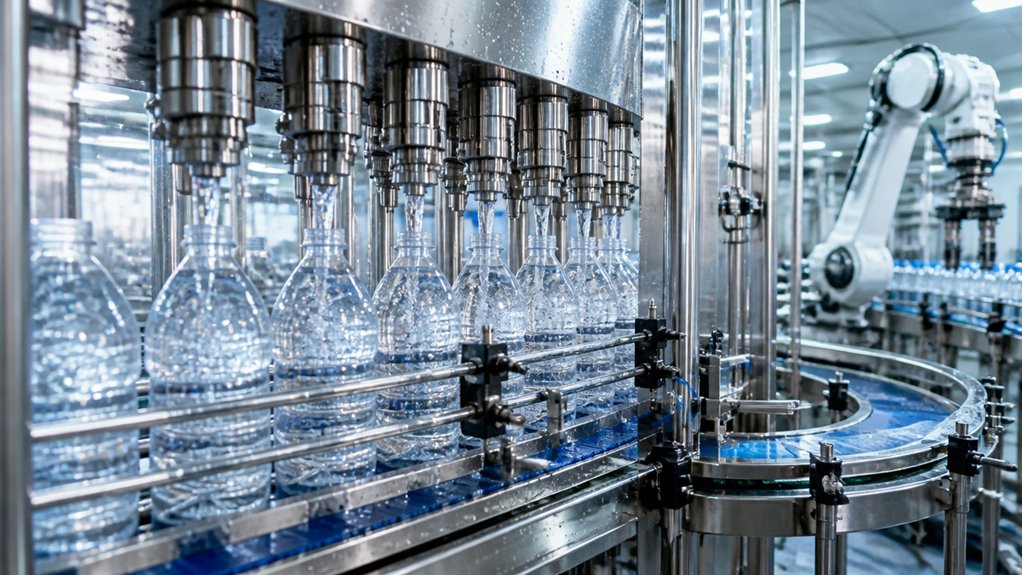
Once bottles are filled and sealed, automation keeps them moving through inspection, labeling, packing, and palletizing with minimal manual handling. You can use synchronized conveyors and sensors to maintain a steady flow, reduce bottlenecks, and limit contact that could introduce contamination. Vision systems check fill levels, cap placement, and label position, while reject mechanisms remove faulty units without stopping the line. Automated case packers group bottles consistently, and robotic palletizers build stable loads for efficient handling. You’ll need to match line speed to equipment capacity and schedule routine maintenance to prevent unplanned downtime. Quality assurance also depends on calibrated inspection systems and clear procedures for responding to defects. Although automation doesn’t replace controls for Water sourcing, it helps you process approved water efficiently and deliver consistent products at scale.
How Packaging Keeps Bottled Water Traceable?
Packaging helps you trace each bottle from production to sale. Batch codes and dates, along with clear lot identification on labels, link bottles to specific production runs. QR codes can give you quick access to additional tracking details.
Batch Codes and Dates
Every bottle carries a code that connects it to a specific production batch. You can use this printed mark, often placed on the label, cap, or bottle neck, to identify when and where the water was filled. Date codes show the production date and, where applicable, a recommended use-by date. Together, these details help you check freshness and let manufacturers isolate affected products if testing reveals a quality concern.
For reliable traceability, producers apply codes that remain legible through shipping and storage. You should be able to find and read them without removing the label. Accurate records link each code to production and distribution data, supporting targeted recalls instead of broad product withdrawals. Clear, consistent marking also supports consumer perceptions of safety and helps teams assess Environmental impact by limiting unnecessary disposal of unaffected bottles.
QR Code Tracking
How can a QR code make bottled water easier to trace? With QR code integration, you can connect each package to digital records that follow its journey through production and distribution. A quick scan can show where the water was processed, how it moved through the supply chain, and whether it reached authorized retailers. This gives you practical Supply chain transparency without crowding the package with details.
To make tracking useful, link the code to accurate, current information and test it across common phones and scanning apps. Keep access simple: consumers should reach clear product and sourcing details in seconds. You can also use scan data to identify distribution patterns or respond faster when a quality concern arises. Protect records from unauthorized changes, and verify the code remains readable throughout storage and transport. QR tracking complements, rather than replaces, your established quality controls.
Labeling and Lot Identification
Clear labels and lot codes help you trace bottled water from production to the point of sale. You rely on Label accuracy to give customers essential details, including the brand, water source, volume, and required regulatory information. Check label content against approved specifications before printing, and verify placement and legibility during production. A smudged date or missing detail can confuse buyers and complicate a recall.
Assign each production run a unique lot code, then print it clearly on every bottle or package. Your code should link to records for the bottling date, line, source, and quality checks. This Lot traceability lets you quickly identify affected products, investigate issues, and notify distributors when needed. Keep coding equipment calibrated, inspect samples regularly, and retain production records so you can respond confidently to customer or regulator questions.
How Bottlers Cut Water and Material Waste?
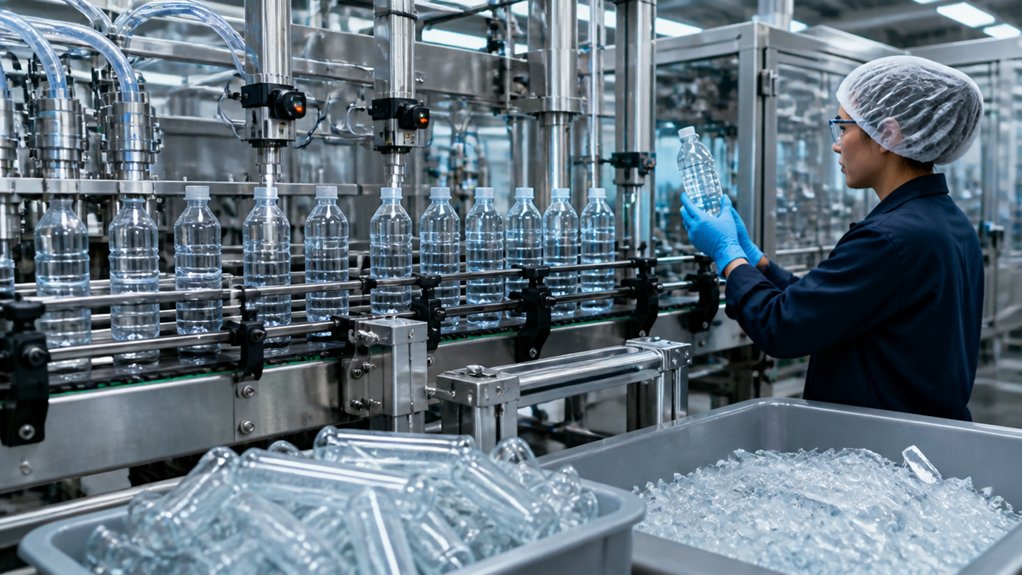
To cut waste, bottlers track how much water and packaging each production run uses, then target losses at their source. You can improve water conservation by repairing leaks, optimizing rinse cycles, and reusing suitable process water for cleaning or cooling. Metering each stage helps you spot unusual use and verify savings. For materials, calibrate fillers and cap applicators to prevent spills, rejects, and damaged closures. Lightweight bottles use less resin, while recycled content and Eco friendly packaging can reduce demand for virgin materials. You can also adjust line settings to limit start-up scrap and sort rejected containers for recycling. Review waste data regularly, set measurable reduction targets, and train operators to report losses promptly. These steps lower disposal costs, conserve resources, and make production more efficient without compromising product quality.
How Bottled Water Stays Safe in Distribution?
You can protect bottled water in distribution by verifying that each cap and seal remains intact. Use temperature-controlled transport when required to limit exposure to heat or freezing. Follow storage and handling standards to keep bottles clean, undamaged, and traceable.
Secure Sealing Practices
How does bottled water stay protected after it leaves the plant? Secure closures create a barrier against contamination and help preserve product quality through distribution. At the filling line, manufacturers match each cap to the bottle finish, then apply controlled torque so the closure seals firmly without damaging the threads. You can verify seal integrity with routine checks for leaks, loose caps, and inconsistent application.
Tamper evidence gives you a clear way to spot interference before opening. A cap’s breakaway band should remain connected until the first twist, then separate visibly. Shrink bands or other approved seals can add another layer of protection when appropriate. Inspect packaging during handling, and reject bottles with broken bands, damaged caps, or signs of leakage. Keep closure specifications, inspection results, and corrective actions documented so you can trace problems and maintain reliable sealing practices across production batches.
Temperature-Controlled Transport
During distribution, bottled water stays protected when transport conditions limit excessive heat, freezing, and prolonged sunlight. You can preserve package integrity and product quality by choosing covered vehicles, planning efficient routes, and monitoring cargo conditions. Temperature stability matters because prolonged heat can affect bottle materials and accelerate changes in taste, while freezing may damage containers or seals. Use temperature sensors to identify excursions and document readings throughout transit. Cold chain logistics may be appropriate when climate, distance, or product specifications require tighter control; set clear limits and verify equipment performance before loading. Secure loads to prevent movement, and keep shipments away from direct sun during stops. If conditions exceed defined limits, assess the affected lot before release. These transport controls help you deliver sealed water in suitable condition without substituting for sound manufacturing and quality checks.
Storage and Handling Standards
After transport, proper storage and handling keep bottled water protected until delivery or sale. You should store cases in a clean, dry, well-ventilated area, away from direct sunlight, chemicals, and strong odors. Stable storage conditions help protect packaging and preserve water quality. Keep products off floors and away from walls so you can inspect stock, prevent moisture damage, and support airflow.
Apply first-in, first-out rotation, and check dates, seals, and containers routinely. Don’t sell bottles with leaks, damaged caps, or compromised packaging. Handle cases carefully; dropping or crushing them can weaken seals and create contamination risks. Maintain Container sanitation by cleaning reusable totes, pallets, and storage equipment on a documented schedule. Train staff to wash hands, use clean handling tools, and separate bottled water from cleaning supplies. These checks help you maintain safe distribution and traceability.