
In 2026, neuro-beverages pair familiar flavors—think citrus and herbs or berry and green tea—with ingredients intended to support calm alertness or mental clarity. You’ll find caffeine alongside L-theanine, botanicals, adaptogens, or B vitamins, but more ingredients don’t guarantee better focus. EEG can track electrical brain activity; it can’t directly prove you’ll think more clearly or perform better. Check caffeine and ingredient amounts, study quality, and taste before choosing. A closer look can help you separate promising signals from persuasive packaging.
What Makes a Drink a Neuro-Beverage?
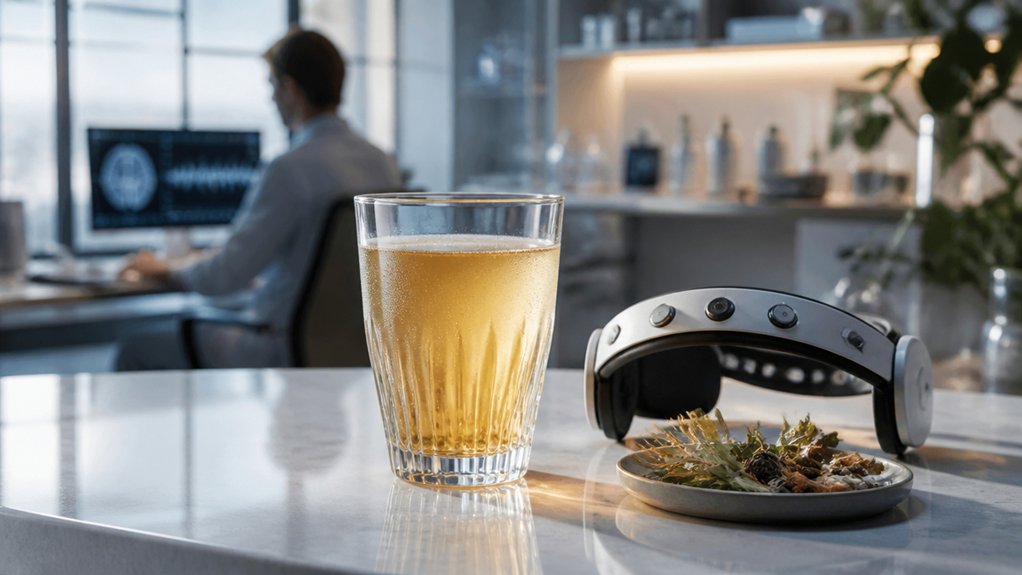
What makes a drink a neuro-beverage? You’ll find the answer in its deliberate blend of taste, function, and formulation. Unlike a standard soda or juice, it pairs a drinkable base with ingredients selected to support a specific cognitive experience, such as calm alertness or mental clarity. Think green tea, botanicals, amino acids, or adaptogens, balanced with familiar flavors rather than medicinal notes.
Flavor combinations help make those ingredients approachable: bright citrus can lift earthy herbs, while berry can soften green tea’s gentle bitterness. You’ll also notice packaging innovations, from slim cans to clear ingredient callouts, that make these drinks easy to spot and understand. As the category grows in 2026, you can expect sharper flavor profiles, transparent labels, and carefully designed formulas—not simply another beverage with a futuristic name.
Why Do Focus Drinks Go Beyond Caffeine?
Caffeine can sharpen your alertness, but you may still hit a jittery ceiling or energy dip. That’s why today’s focus drinks pair crisp tea or citrus notes with ingredients like L-theanine, which may support a steadier feel. Some blends even track EEG signals to explore how their formulas affect focus.
Caffeine’s Cognitive Limits
A quick caffeine lift can sharpen alertness, but it doesn’t always deliver the calm, sustained focus you want—and more isn’t necessarily better. Your response depends on dose, timing, sleep, and tolerance, so the same bright, citrusy can may feel crisp one day and jittery the next. Push the dose, and you may trade steady attention for restlessness, a racing pulse, or an afternoon crash. Regular use can also build tolerance, making that familiar flavor cue less effective and raising concerns about Caffeine addiction. Brainwave variability adds another wrinkle: EEG patterns differ across people and even across sessions, so caffeine’s effects won’t look identical for every brain. That’s why today’s focus-drink trend looks beyond a bigger stimulant hit, seeking more measured, testable ways to support attention without promising a universal buzz.
Complementary Brain-Supporting Ingredients
With caffeine’s limits in view, focus drinks are pairing its familiar lift with ingredients aimed at steadier support. You’ll find L-theanine beside green tea, where its gentle, savory edge can soften caffeine’s sharper feel. Adaptogens such as rhodiola and botanicals like lion’s mane add earthy notes, while B vitamins and choline bring label-friendly appeal. These blends reflect a shift from a single stimulant toward layered formulations, though evidence varies by ingredient and dose. Neurochemical interactions may shape how compounds work together, but a crowded ingredient list doesn’t guarantee a meaningful benefit. Flavor matters, too: citrus, ginger, cacao, and herbal bitters can make functional formulas feel more like a crafted drink than a supplement. You should also weigh taste, transparency, and expectations; placebo effects can influence how energized or focused you feel.
EEG-Measured Focus Effects
As focus drinks move beyond caffeine, some brands are using EEG recordings to explore whether blends change measurable patterns of attention—not just how alert you feel. You’ll see this trend pair bright citrus, berry, or herbal notes with ingredients such as L-theanine, botanicals, and functional mushrooms. EEG can track brain-wave activity during attention tasks, offering clues about focus and mental workload; it can’t prove a drink boosts intelligence or delivers neuroplasticity enhancement. Your response also depends on sleep, dose, and the sensory integration of aroma, taste, and texture. A smooth, lightly tart sip may feel more inviting than a bitter, over-sweet formula, shaping your experience without confirming a neural effect. Treat EEG claims as early evidence, not a promise: check study design, ingredient amounts, and whether results apply to you.
Which Ingredients May Support Attention?
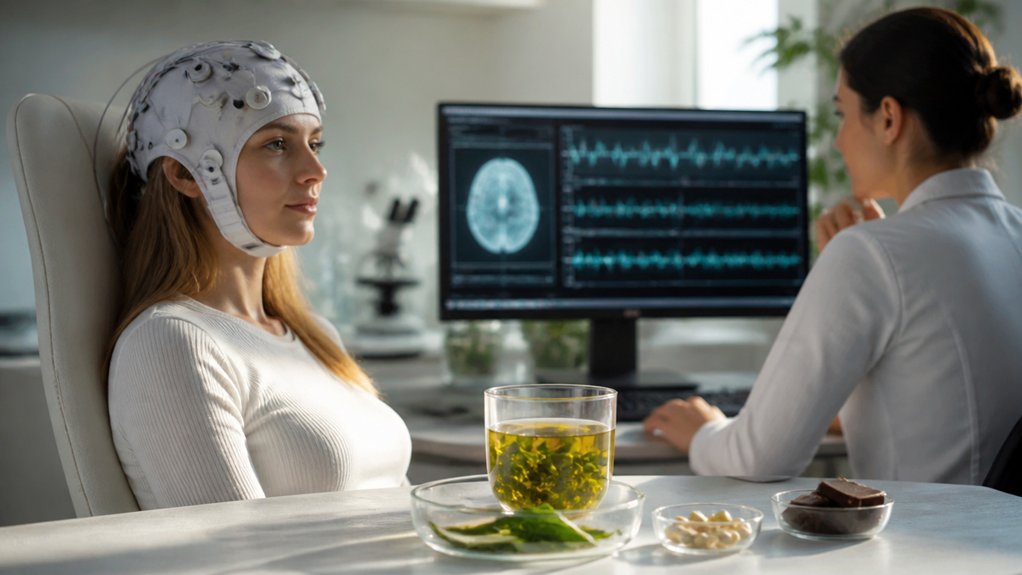
Flavor can make a functional drink feel like a treat, not a chore. Bright citrus can balance earthy botanicals; ginger adds warmth, and berry notes soften bitterness. You’ll also see choline sources, often paired with other compounds in ingredient synergy, though a crowded label doesn’t guarantee a better formula.
Choose transparent sourcing, clear amounts, and a taste you’ll enjoy regularly. If you’re sensitive to stimulants, pregnant, or taking medication, ask a health professional before trying new ingredients.
How Does EEG Measure Brain Activity?
Like a tasting note for your brain, EEG picks up the electrical signals your neurons produce. Sensors placed on your scalp track those signals without adding a drop of anything to your drink. You can then see brainwave patterns that researchers use to study attention and alertness.
Electrical Signals
When you sip a neuro-beverage, EEG can track the brain’s electrical activity—but it doesn’t read thoughts or measure focus directly. Your brain cells communicate through tiny voltage changes; when many neurons fire in coordinated patterns, their signals reach the scalp and create measurable rhythms. EEG sensors detect these fluctuations, and software displays them as waveforms that shift over milliseconds. Researchers compare patterns before and after a drink, while you complete a task, to explore possible effects—not to prove a flavor boosts cognition. Ingredients linked to neurotransmitter modulation may influence neural activity, but EEG can’t identify a specific compound’s action by itself. Your response may also change with sensory adaptation: a bright citrus note can feel less vivid after repeated sips. That’s why controlled trials matter in this fast-moving beverage trend.
Electrode Placement
To map EEG activity, researchers place small electrodes at standardized points across the scalp, often securing them in a cap. This precise electrode placement lets you see how sensors sample electrical activity without entering the brain. Each contact rests against your scalp, usually with conductive gel or saline to improve signal quality. A technician measures head landmarks, then follows a repeatable layout so results can be compared across sessions and participants. The setup may feel more like fitting a snug tasting-room headset than a medical procedure, though careful positioning matters. Researchers also check contact quality before recording, reducing interference from loose sensors or dry skin. That consistency supports neural mapping, helping teams evaluate how a beverage’s ingredients relate to measured activity. In 2026, this careful groundwork brings rigor to cognitive-enhancer claims.
Brainwave Patterns
As you sip a neuro-beverage, EEG tracks brain activity through tiny voltage changes at the scalp, not through thoughts themselves. Sensors pick up synchronized electrical rhythms from groups of neurons, then software sorts those signals into frequency bands. You’ll see alpha activity linked with relaxed wakefulness, beta with alert engagement, and theta with drowsiness or memory processes. These patterns aren’t flavor notes or proof that an ingredient works; they’re measurements researchers interpret alongside timing, tasks, and your baseline.
If a blend promises brainwave entrainment, EEG can test whether rhythms shift during exposure, but it can’t establish benefit on its own. Researchers may also compare cognitive load across tasks, watching how signal patterns change as demands rise. That makes EEG useful for studying effects of caffeine alternatives, adaptogens, or nootropics—without mistaking a colorful chart for a verdict.
Can EEG Show That Focus Drinks Work?
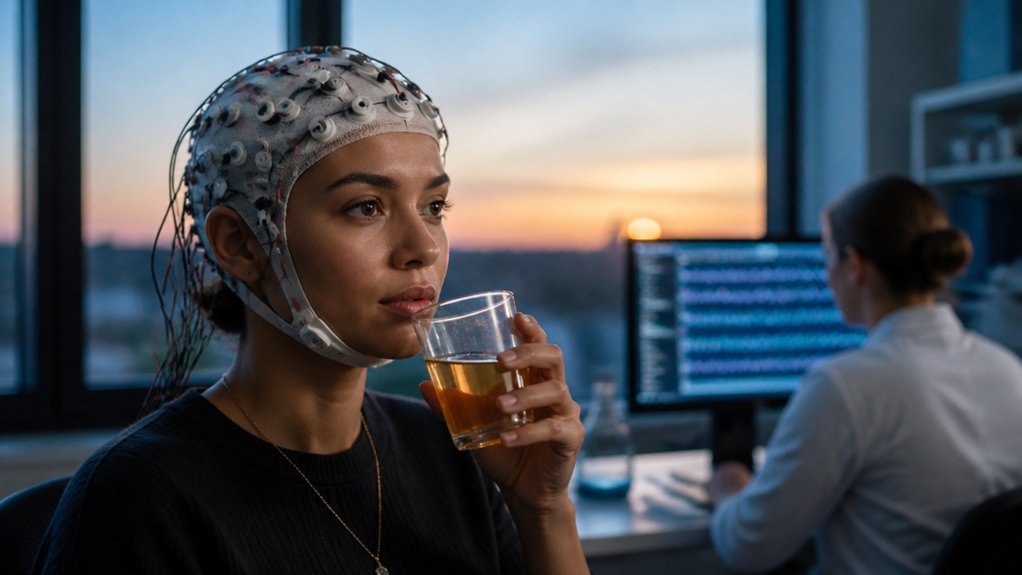
EEG can track brain-wave changes after a focus drink, but it can’t prove the drink made you more productive. If you sip a tart yuzu blend with L-theanine, or a bitter cacao tonic with adaptogens, EEG may reveal shifts in attention-linked activity. Those signals can help you see whether a formula changes your brain’s response—not whether you finished your work faster or made sharper decisions.
That distinction matters as neuro-beverages move beyond caffeine toward carefully layered ingredients and polished flavors. Neurofeedback applications may use EEG signals to guide training, while Brainwave synchronization describes patterns researchers can observe, not a guaranteed benefit in your can. Treat a glowing brain-wave graphic as one clue, not a verdict. Your experience, the ingredient label, and real-world outcomes still matter when you judge whether a focus drink earns a place in your routine.
How Do Researchers Test Focus and Calm?
When researchers test focus and calm, they pair quick tasks—like spotting a target or recalling words—with self-ratings of alertness and tension. You might also see EEG traces captured before and after a drink, while researchers track timing, serving size, and ingredients such as L-theanine, botanicals, or familiar caffeine. Blinded tastings help separate a crisp citrus profile or earthy adaptogen note from expectations about what the formula should do. That matters because cognitive placebo effects can shape how you rate your own focus, even when the cup tastes convincing. Strong studies compare the beverage with a matched control, standardize sleep and meal timing, and repeat tests across sessions. Neuro enhancement ethics also call for clear consent, honest claims, and careful handling of brain data—so you can judge the process, not just the pour.
Which Focus-Drink Benefits Have the Best Evidence?
Among focus-drink benefits, caffeine’s short-term boost to alertness has the strongest evidence, while L-theanine may smooth the ride for some people. You might notice sharper attention, but results vary with dose, sleep, and sensitivity. Evidence for ingredients such as B vitamins, adaptogens, and nootropics is less consistent; a bright label doesn’t prove a cognitive lift. Check amounts, study quality, and whether research tested the finished drink or just one ingredient.
Flavor combinations can make evidence-led formulas more appealing: citrus with green tea, or berry with a measured caffeine dose, can balance bitterness without promising magic. Watch marketing strategies that turn EEG graphics or “calm focus” claims into certainty. Treat those cues as prompts to investigate, not proof. Choose a drink for taste and transparent dosing, then judge whether you actually feel a reliable benefit.
How Do Focus Drinks Compare With Coffee?
When you compare focus drinks with coffee, check the caffeine on the label—not just the bold roast or bright can. You may find add-ins like L-theanine alongside familiar coffee notes, though formulas vary. Consider how long the lift lasts and whether the effects feel smooth, sharp, or jittery.
Caffeine Content
Caffeine levels in focus drinks vary widely, so check the label before comparing them with coffee. A typical 8-ounce brewed coffee delivers about 95 milligrams, though bean, roast, and serving size shift that figure. Focus drinks may contain less, match a small coffee, or pack more into a slim can. Read the total per container, not just per serving, and count your refills across the day.
Flavor profiles can make the comparison less obvious: bright citrus, berry, or tea notes may soften caffeine’s bitterness, while coffee’s roasted edge signals its familiar kick. Marketing strategies often spotlight “clean energy” or precise milligrams, but the number—not the slogan—helps you gauge intake. If you’re sensitive, start with a smaller dose and notice how timing affects sleep. Your best pick balances taste, dose, and routine.
Focus Ingredients
Beyond caffeine, focus drinks may add L-theanine, taurine, B vitamins, or herbal extracts, while coffee’s supporting cast is simpler: antioxidants and naturally occurring compounds. You’ll find these formulas in flavors that range from citrusy and bright to berry-sweet, often with a polished, functional feel. Coffee offers a more familiar profile: roasted, bitter, and easy to customize with milk or spices.
Check labels closely. Ingredients can vary widely, and a sleek can doesn’t tell you how much of each compound it contains. Some drinks combine several additions, while others lean on flavor and branding. Consumer perception may make a complex blend seem more advanced than a cup of coffee, but ingredient count isn’t proof of benefit. Neuro enhancement ethics also matter: you deserve clear claims, transparent sourcing, and honest labeling when choosing what goes in your cup.
Duration And Effects
A focus drink may feel polished and quick, but its staying power often comes down to caffeine dose, not the can’s extra ingredients. Like coffee, it can sharpen alertness for several hours; your response depends on serving size, tolerance, sleep, and metabolism. A bright citrus blend or berry fizz may taste lighter than a dark roast, yet check the label: some cans pack as much caffeine as multiple cups.
Added L-theanine or botanicals may shape the experience, but don’t assume they extend focus or prevent a crash. Sip slowly, track how you feel, and avoid late-day caffeine that can disrupt sleep. Neuroplasticity research explores how the brain adapts, but it doesn’t prove a drink boosts learning. If Cognitive fatigue sets in, water, food, movement, and rest may help more than another can.
How Can You Check a Drink’s Label and Evidence?
When a neuro-beverage promises sharper focus, check the ingredient list before you trust the front-of-can claims: look for exact amounts, serving size, added caffeine, sugar, and proprietary blends that hide doses. Nutritional transparency lets you compare formulas instead of chasing trendy names. Check whether the label identifies each active ingredient and gives a dose that matches the research cited. Then follow the evidence trail: prioritize human studies on the same ingredient, amount, and outcome, not a brand-funded claim or a lab result alone. EEG data can add useful detail, but ask what researchers measured and whether the study was peer-reviewed. Finally, use sensory evaluation: taste, aroma, sweetness, and texture matter, because a crisp citrus or herbal finish won’t prove cognitive benefits. Judge flavor and evidence separately before you buy.
Who Should Be Cautious With Focus Drinks?
Even a transparent label can’t make every focus drink a good fit: caffeine and other stimulants may affect people differently. If you’re pregnant, breastfeeding, sensitive to caffeine, or managing high blood pressure, anxiety, heart rhythm issues, or a chronic condition, check with your clinician before sipping. Stimulant blends can also interact with prescription medicines, while adaptogens and nootropics may have limited safety data.
Read beyond the bright flavor notes: count caffeine from coffee, tea, guarana, and yerba mate, and watch for hidden blends or added sugar. If a drink leaves you jittery, nauseated, or wired at bedtime, stop and reassess. Protect Sleep quality by choosing a lower-caffeine option earlier in the day—or skip it. Mindfulness training, hydration, and a balanced snack may sharpen focus without adding another active ingredient to your routine.


