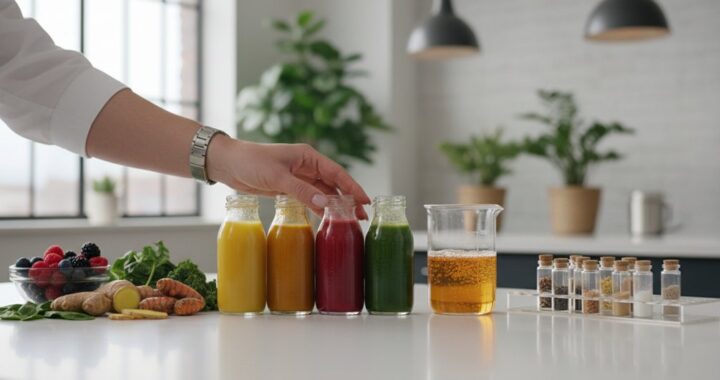

To create a commercial beverage, define your target customer, occasion, and product benefits, then develop a recipe with measured ingredients and consistent sensory testing. Choose ingredients, packaging, and processing that support quality, safety, and shelf life. Verify microbial stability, confirm costs and manufacturing capacity, and have a qualified reviewer check labels and claims. Select sales channels that fit your margins and logistics, then launch in a controlled market. Track sales and customer feedback to guide your next decisions and growth.
Define Your Beverage and Target Customer
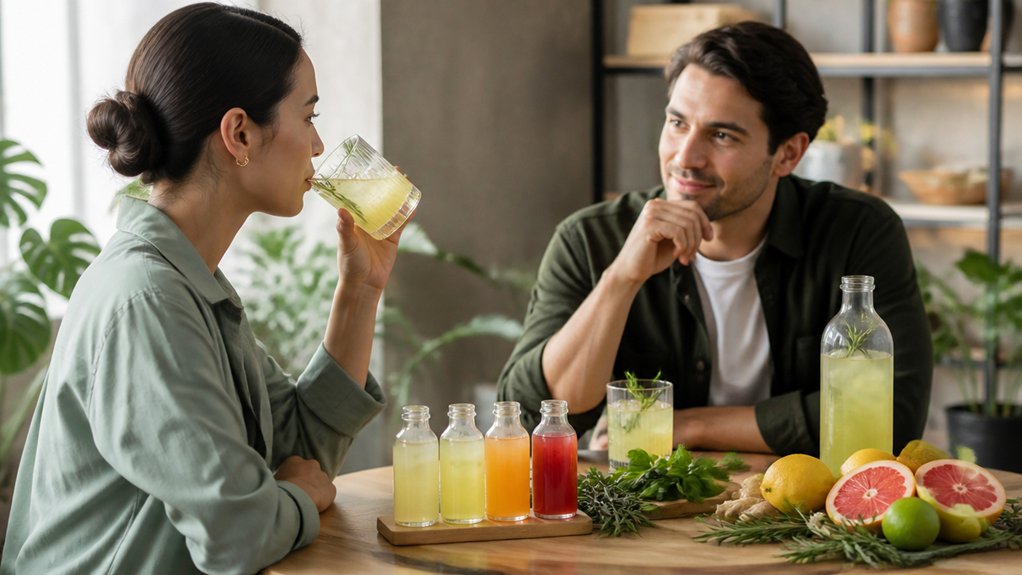
Before you develop a formula, define what your beverage is and who it’s for. Specify its category, intended use, and core benefit, such as hydration, energy, or refreshment. Then identify your target customer by age range, lifestyle, purchasing habits, and needs. Use market research, competitor reviews, and retail data to distinguish proven demand from assumptions.
Set clear positioning: decide what makes your product relevant and different, whether through ingredients, convenience, occasion, or Flavor innovation. Check that your proposed benefit fits the category and can be communicated credibly. Your branding strategy should reflect the audience’s priorities and the product’s price tier, packaging context, and sales channel. Document these decisions in a concise product brief. It’ll guide later development and help you evaluate whether the concept can stand out commercially without confusing customers.
Formulate and Test Your Beverage Recipe
Start with a base formula that specifies each ingredient by weight or volume, including water, sweeteners, acids, flavors, and preservatives. Make small test batches and record every adjustment so you can compare results consistently. Refine samples through sensory checks and, where relevant, pH and Brix measurements until the recipe meets your target profile.
Build Your Base Formula
With your product goals and target market defined, translate them into a measurable base formula. Set target ranges for each ingredient, including water, sweetener, acids, flavors, and any functional components. Express quantities by weight or volume and record the order of addition, so you can reproduce the blend accurately. Account for ingredient specifications, such as sweetness intensity, acidity, and soluble solids, rather than relying on brand names alone.
Build Flavor balance into the formula by defining how sweetness, acidity, aroma, and bitterness should interact. Specify a target pH and soluble-solids level; pH adjustment affects both flavor and microbial stability, so select suitable acids or buffers for your beverage and process. Include processing assumptions, such as dilution, carbonation, or heat treatment, because they influence ingredient levels. Document tolerances and calculation methods, giving your production team a clear, scalable starting point.
Test and Refine Samples
Once your base formula is documented, prepare small, accurately measured batches to check how it performs in the glass. Change one variable at a time—such as acid level, sweetener, flavor concentration, or dilution—so you can identify what drives each result. Record ingredient weights, processing conditions, and observations for every sample.
Use sensory evaluation to assess aroma, sweetness, acidity, body, aftertaste, and overall balance. Serve samples at the intended temperature and, when relevant, after carbonation or storage. Ask a consistent tasting panel to score attributes and note defects; blind codes can reduce bias.
Compare results against your target profile, then adjust the formula and repeat. Check Flavor consistency across replicate batches, not just one successful sample. Keep the strongest version, document revisions, and confirm that refinements remain practical for scale-up and ingredient sourcing.
Choose Ingredients, Packaging, and Processing
Choose ingredients that meet your flavor, nutrition, cost, and supply requirements. Select packaging that protects product quality and suits your distribution needs. Then match processing methods to the beverage’s formulation, safety standards, and shelf-life targets.
Ingredient Selection
What goes into your beverage—and how you package and process it—shapes its flavor, safety, shelf life, and cost.
Start with your target consumer and product brief, then select ingredients that deliver the intended taste, texture, nutrition, and function. Test Flavor combinations in measured bench batches; balance sweetness, acidity, bitterness, aroma, and mouthfeel rather than relying on isolated tasting notes. Check each ingredient’s specifications, including concentration, solubility, allergen status, and permitted use. Confirm that suppliers can provide consistent quality, traceability, and documentation, and assess sourcing sustainability alongside price and availability. Consider how ingredients interact: acids can affect color and stability, while minerals may alter flavor or cause sediment. Record exact weights, grades, and supplier details so you can reproduce successful trials and identify substitutions before scale-up. Validate claims against applicable regulations.
Packaging And Processing
With the formula taking shape, match the package and processing method to the beverage’s ingredients, target shelf life, distribution conditions, and cost. Choose containers that protect against light, oxygen, pressure, and moisture as needed. Your bottle design should suit filling equipment, shipping requirements, customer use, and brand positioning. Confirm material compatibility with acidic ingredients, oils, carbonation, and any processing heat; test closures for leaks and product interaction.
Select processing based on safety and quality goals. You might use hot-fill, pasteurization, retort, or aseptic processing, depending on the formulation and package. Validate time, temperature, and critical controls with a qualified food-safety specialist, then run shelf-life and transport tests. Check labeling regulations for ingredient declarations, allergens, nutrition facts, claims, and required warnings. Coordinate package specifications, process parameters, and label approval before production.
Check Beverage Safety and Shelf Life
Before you finalize a beverage formula, verify that it’s safe to consume and remains stable throughout its intended shelf life. Assess microbial risks based on ingredients, acidity, water activity, and processing conditions. Use a qualified laboratory to test for relevant pathogens and spoilage organisms; don’t rely on appearance or taste alone. Confirm that your thermal treatment, preservatives, or other controls deliver the required safety margin.
Plan shelf life validation under realistic storage conditions, including expected temperature fluctuations and light exposure. Test samples at defined intervals for microbial growth, pH, color, flavor, aroma, carbonation, and package integrity. Set acceptance limits before testing, and document results to support your date coding and handling instructions. If results reveal instability, adjust the formula or process, then repeat testing. Keep records for traceability and review them whenever you change ingredients, processing parameters, or packaging.
Find a Manufacturer and Estimate Costs
Once your beverage’s safety and shelf life are validated, identify manufacturers with the equipment, certifications, and process controls your product requires. For Manufacturer sourcing, shortlist co-packers that handle your beverage type, packaging format, production volume, and processing method. Ask about minimum order quantities, line availability, quality systems, ingredient procurement, and pilot runs. Share your formula and process specifications under a confidentiality agreement, then request a production trial before committing.
Build a Cost estimation model that includes ingredients, packaging, setup, labor, processing, testing, freight, storage, and expected losses. Request itemized quotes at several order volumes; unit costs often fall as volume rises, but larger runs tie up cash and increase inventory risk. Confirm payment terms, lead times, changeover fees, and who owns tooling. Compare total landed cost, not just the quoted per-unit price, and document assumptions before selecting a partner.
Prepare Beverage Labels and Claims
Prepare the label only after you’ve confirmed the formula, serving size, and package dimensions, since each affects what you must disclose and how the information fits. Check the rules in every market where you’ll sell, because requirements vary by jurisdiction and beverage category. Build ingredient labeling from your approved formula, listing ingredients in descending order by weight and identifying required allergens. Verify nutrition values through reliable analysis or calculations, then format the Nutrition Facts panel, net quantity, manufacturer details, and any required handling instructions. Review marketing claims against applicable definitions and evidence. Terms such as “natural,” “low sugar,” or “excellent source” may trigger specific criteria; don’t use them without substantiation. Confirm that claims match the finished product and don’t imply unapproved health benefits. Have a qualified regulatory reviewer check the final proof before printing. Keep supporting records for audits.
Plan Sales Channels and Beverage Marketing
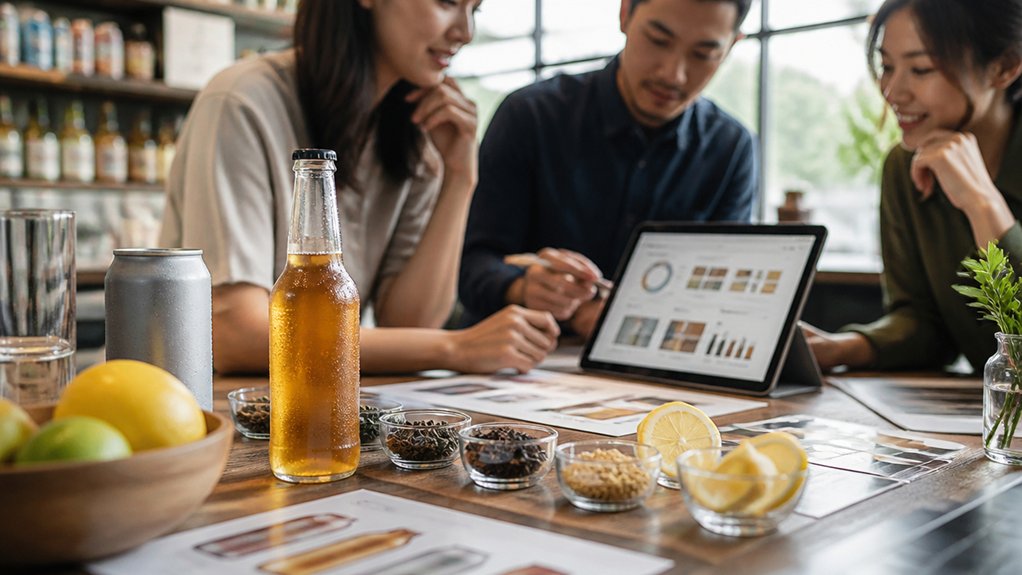
Choose sales channels that fit your beverage’s price, shelf life, target customers, and production capacity. Compare direct-to-consumer sales, specialty retailers, grocery distributors, food-service accounts, and online marketplaces. Model each channel’s margins, fees, minimum order quantities, payment terms, and cold-chain requirements. Confirm you can meet expected volumes without compromising quality or cash flow.
Build your marketing plan around a clear positioning statement, supported by specific product benefits and compliant label claims. Define your audience, price point, and purchase occasions, then tailor messaging to each channel. Use Social media to share ingredient information, serving ideas, and production expertise; maintain a consistent voice and schedule. Evaluate influencer partnerships for audience fit, engagement quality, disclosure practices, and cost before committing. Prepare product photography, sell sheets, samples, and retailer materials so buyers and customers receive consistent, accurate information across touchpoints.
Launch Your Beverage and Track Results
Launch in a controlled sequence, starting with a limited release or a small set of sales channels so you can test demand without overextending production. Confirm inventory, packaging, shelf-life controls, and retailer or distributor requirements before shipping. Set a launch calendar with clear responsibilities for production, delivery, promotions, and customer support. Track sales analytics by channel, location, and week; compare sell-through, repeat purchases, returns, and promotional costs against your targets. Monitor stockouts and reorder timing to distinguish weak demand from supply gaps. Collect customer feedback through reviews, surveys, retailer reports, and direct conversations. Log recurring comments about flavor, price, package size, and availability, then assess them alongside sales data. Make measured adjustments to production volumes, messaging, or distribution. Review results at defined intervals, document decisions, and scale only when performance and supply capacity support expansion.