
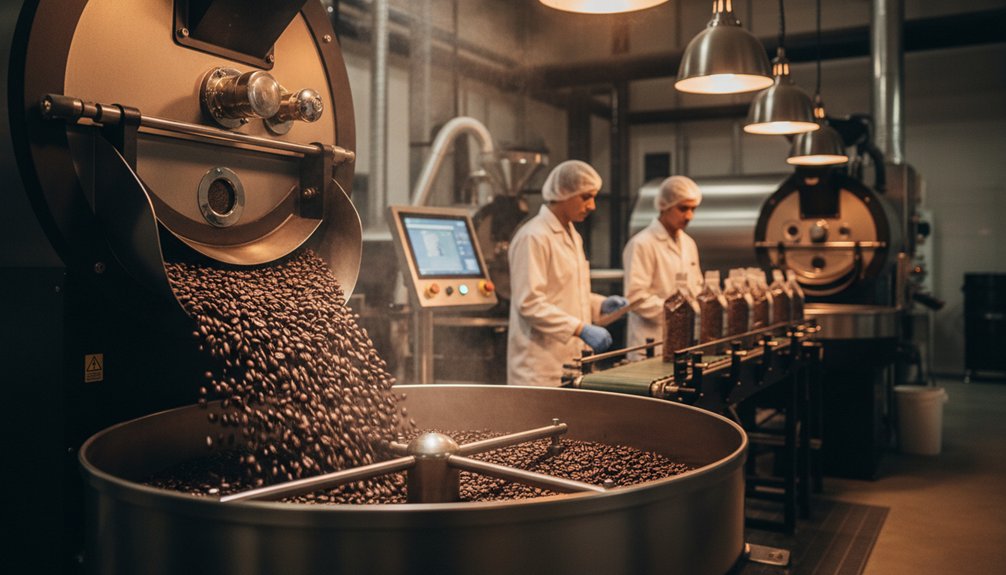
In modern coffee manufacturing, you start with green beans cleaned, sorted, and checked for defects, moisture, and origin characteristics. Roasting then transforms sugars, acids, and amino acids into aromas and flavors, from bright, floral notes to deep chocolate richness. Roasters tune heat, airflow, and timing to shape each profile, using temperature readings and first crack as guides. Quality checks assess taste and freshness before grounds are packed in oxygen-resistant materials, often with one-way valves. The steps ahead show how each choice protects flavor.
How Are Green Coffee Beans Prepared?
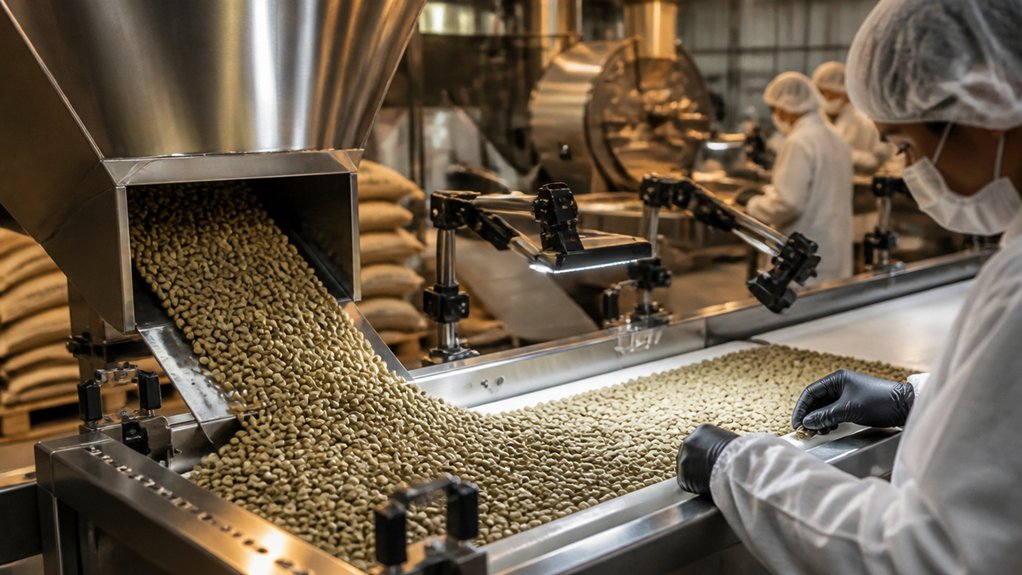
Before roasting can release their aroma, green coffee beans must be cleaned, sorted, and checked for defects. You’ll see producers remove stones, twigs, dust, and other foreign material with screens, air separators, and magnets. They then grade beans by size and density, helping you get a more even batch and consistent cup quality. Optical sorters or trained inspectors catch discolored, insect-damaged, or broken beans that could introduce harsh, musty, or fermented notes.
A careful bean origin analysis guides these checks: moisture, processing method, and lot characteristics vary by source. You’ll want moisture measured and defects logged before the beans enter Green bean storage. Keep them in clean, dry, odor-free conditions, protected from heat, light, pests, and humidity. Proper preparation preserves the lot’s distinctive qualities and supports reliable production.
How Does Roasting Develop Coffee Flavor?
As green coffee beans heat, chemical reactions transform their stored sugars, acids, and amino acids into the aromas and flavors you recognize in the cup. The Maillard reaction creates toasted, nutty, and savory notes as sugars and amino acids interact, while caramelization adds sweetness and depth. Acids shift, too, shaping brightness and balance. These changes drive Flavor development, revealing qualities that reflect the bean’s origin and processing. You’ll notice lighter roasts often preserve floral, fruity, and crisp characteristics; darker roasts tend toward chocolate, spice, and fuller-bodied flavors. Roasting also produces aromatic compounds that give each coffee its distinctive fragrance. A skilled roast brings these elements into harmony without masking the bean’s character. When you taste the result, sweetness, acidity, bitterness, and aroma should feel integrated, not competing.
How Do Roasters Control Time and Temperature?
To shape the flavor they want, roasters carefully manage both roast time and temperature. They adjust heat as beans move through drying, browning, and development, guiding sugars and aromatic compounds toward a chosen balance. A steady rise can preserve clarity, while a longer finish may deepen sweetness and body. You’ll find that temperature regulation depends on responsive sensors, burner settings, airflow, and drum speed; each affects how evenly beans absorb heat. Roasters build roasting profiles that map temperatures and timing for particular origins, processing methods, and batch sizes. They watch the bean temperature and listen for first crack, then decide when to reduce heat or end the roast. Small changes matter: a few seconds or degrees can shift acidity, bitterness, and aroma. Skilled control makes each roast intentional, not accidental.
How Are Coffee Quality and Freshness Checked?
A carefully controlled roast still needs checks to confirm that its flavor and freshness meet expectations. During Coffee sensory analysis, you’ll assess aroma, acidity, sweetness, body, and aftertaste, then compare the cup with the intended profile. Trained tasters look for defects such as sourness, staleness, or uneven roast character. They grind and brew samples under consistent conditions so differences reflect the coffee, not the method.
Quality control procedures also include measuring moisture and water activity, which can reveal risks to flavor stability. You’ll track roast color and inspect beans for inconsistent development or visible defects. To check freshness, teams evaluate aroma and taste over time, noting when volatile compounds fade or oxidation dulls the cup. These checks help you release coffee only when its sensory character and technical measures meet defined standards.
How Are Coffee Grounds Packaged for Freshness?
Once coffee is ground, its larger exposed surface lets oxygen strip away aroma and flavor quickly. To protect its sweetness, acidity, and fragrant oils, manufacturers pack it promptly, often under controlled conditions. You’ll find ground coffee sealed in high-barrier Packaging materials, such as foil laminates, that limit oxygen, moisture, and light. Many bags include a one-way valve: carbon dioxide escapes, but air can’t enter. Some producers flush packs with nitrogen before sealing, slowing oxidation without adding flavor.
Your Coffee storage habits matter, too. Keep the unopened pack sealed, then transfer opened grounds to an airtight, opaque container. Store it in a cool, dry cupboard, away from heat and sunlight; avoid the refrigerator, where moisture and odors can dull the cup. Buy only what you’ll use soon, and reseal promptly after each scoop.