
In 2025, you can choose a steadier caffeine lift by favoring energy drinks with clearly stated, measured caffeine and less sugar over standard high-stimulant blends. Caffeine blocks adenosine, boosting alertness, but large doses—and hidden caffeine from guarana or tea extracts—can trigger jitters and interfere with sleep. No ingredient guarantees crash-free energy, so check serving sizes and your total intake. Your sensitivity, sleep, and timing matter too; the details below can help you compare options and make a more informed choice.
Why Can Energy Drinks Cause Jitters?

Energy drinks can cause jitters when caffeine blocks adenosine, a brain chemical that promotes sleepiness, and increases nervous-system activity. You may notice restlessness, a faster heartbeat, or shaky hands, especially after a large serving or several caffeinated products. Check the label: caffeine can come from guarana, coffee extract, or tea extract, so the total may be less obvious than the front-of-can claims suggest.
Your response also depends on Caffeine metabolism. It varies with genetics, medications, pregnancy, smoking, and liver function, so caffeine can remain active longer for some people. Sugar doesn’t cause caffeine’s stimulant effect, but a sweetened drink may add to how intense you feel afterward. Track your intake and timing, and don’t combine energy drinks with coffee or pre-workout products. If you rely on them daily, energy dependency may develop; reduce intake gradually and seek medical advice for severe symptoms.
What Does “Low-Crash” Energy Mean?
“Low-crash” energy means you may feel a steadier lift with fewer sharp rises and drops. Caffeine dose, sugar content, and other ingredients can affect how energy feels, though they can’t guarantee a crash-free experience. Check the label and notice how your body responds.
Steady Energy Release
If you want energy that lasts, look beyond a drink’s caffeine total: “low-crash” isn’t a regulated claim, but it usually describes a gradual lift without a sharp spike and drop. Your response depends on caffeine metabolism, which varies with genetics, medications, pregnancy, and habitual intake. A product can’t guarantee steady effects for everyone, even when its label promises sustained energy.
Check the ingredient list and serving size. Caffeine provides the stimulant effect; tea extracts may contribute additional caffeine, so count all sources. Sugar can add calories and a quick energy source, while non-sugar ingredients such as L-theanine are still being studied for their effects on alertness. Energy stabilization isn’t a proven outcome you can infer from marketing language alone. Compare caffeine amounts, follow label directions, and consider your sensitivity before choosing a drink.
Fewer Energy Swings
A smoother-feeling lift depends on more than a drink’s caffeine total. “Low-crash” isn’t a regulated claim; brands may use it to suggest fewer noticeable ups and downs, but no ingredient can guarantee that effect.
Your response can vary with sleep, meals, hydration, and Caffeine metabolism. Check the label for caffeine per serving, serving size, and added stimulants; guarana, for example, also contributes caffeine. Sugar may provide quick energy, while a large dose can affect how you feel afterward. Pairing caffeine with food may help you avoid drinking it on an empty stomach, though individual responses differ.
Notice your own patterns, and don’t assume “steady” means risk-free. If you rely on repeated servings to function, Energy dependency may be developing. Track intake, limit late-day caffeine, and consider reducing it gradually if you want fewer swings.
How Does Caffeine Affect Energy and Sleep?
Caffeine blocks adenosine, a brain chemical that promotes sleepiness, so you may feel more alert and focused for a while. It doesn’t create energy; it temporarily changes how your brain registers fatigue. The effect depends on dose, timing, and your Caffeine metabolism, which varies with genetics, medications, and other factors. A standard energy drink may contain enough caffeine to affect you for hours, even after the noticeable lift fades.
That lingering stimulant activity can delay sleep, shorten sleep duration, or reduce sleep quality. Sleep disruption may then leave you tired the next day, prompting another caffeinated drink and extending the cycle. Check the label for caffeine from all sources, including guarana, and consider when you plan to sleep. Your sensitivity matters, so track how timing and serving size affect your rest.
Can Lower Caffeine Make Energy Feel Smoother?

If you’re sensitive to caffeine, a lower-dose drink may feel gentler and cause fewer jitters. The effect depends on your total caffeine intake, serving size, and sensitivity. Check the label, since other stimulants can also affect how energized you feel.
Gentler Stimulation
Because dose shapes how quickly caffeine affects you, a lower-caffeine drink may feel less intense and jittery than a high-dose option—but it won’t necessarily provide longer-lasting energy. Check the label for milligrams per serving, since can size and serving count can obscure your actual intake. You may also notice ingredients such as L-theanine, which some products pair with caffeine, though evidence for a smoother subjective effect remains limited. Sugar, guarana, and other caffeine sources matter too: guarana contributes caffeine, so the total may exceed what the front label suggests. If you’re sensitive, compare products and start with a smaller serving rather than assuming “natural” means gentle. For energy without caffeine, consider alternative energy sources, including food, water, movement, or caffeine free options; each supports alertness differently, not like a stimulant.
Reduced Jitters
A lower caffeine dose may reduce jitters, especially if you’re sensitive or have had little caffeine, but it won’t guarantee a smoother-feeling boost. Your response also depends on caffeine metabolism, sleep, food intake, medications, and individual sensitivity. Check the label for total caffeine from all sources, including guarana, and avoid stacking drinks with coffee or supplements. Sugar can add a rapid energy rise and fall, while other stimulants may intensify unwanted effects. A smaller serving or lower-caffeine option can support jitters mitigation, but ingredients such as L-theanine haven’t been proven to reliably prevent caffeine-related jitters. Try a modest amount, drink it slowly, and notice how you feel before having more. If caffeine causes palpitations, anxiety, or persistent discomfort, stop using it and seek medical advice when needed.
Which Ingredients Shape a Low-Crash Formula?
A lower-crash energy drink starts with a measured caffeine dose, since more isn’t necessarily better for alertness and can raise the risk of jitters or sleep disruption. Check the label for caffeine from all sources, including tea or guarana, so you can judge the total amount. A modest dose may suit your needs better than a high-stimulant blend.
Sugar content also matters: a heavily sweetened drink adds calories and may not fit your preferences. If you want sweetness, compare options with less added sugar or non-sugar sweeteners. Look for transparent ingredient lists and clearly stated amounts rather than vague proprietary blends. Flavor innovations can make lower-sugar recipes more appealing, while branding strategies may emphasize function; judge products by their labels, not promises. Your tolerance, timing, and serving size still shape how a drink feels.
Do Added Ingredients Prevent an Energy Crash?
Beyond caffeine dose and sugar content, added ingredients such as B vitamins, taurine, and herbal extracts are often marketed as ways to sustain energy or prevent a crash. But evidence doesn’t show that these additives reliably prevent the fatigue that can follow caffeine’s effects. B vitamins help your body convert food into energy, yet extra amounts won’t boost energy if you aren’t deficient. Taurine may influence several body processes, but research hasn’t established that it prevents a caffeine crash. Herbal extracts vary widely, and their effects depend on the ingredient, dose, and your response. Some additives serve mainly for Flavor enhancement, while marketing strategies may imply benefits stronger than the evidence supports. Check ingredient amounts and claims, and remember that added compounds can’t guarantee steady energy or offset caffeine’s effects. Your sleep and sensitivity matter, too.
How Can You Compare Low-Crash Energy Drinks?
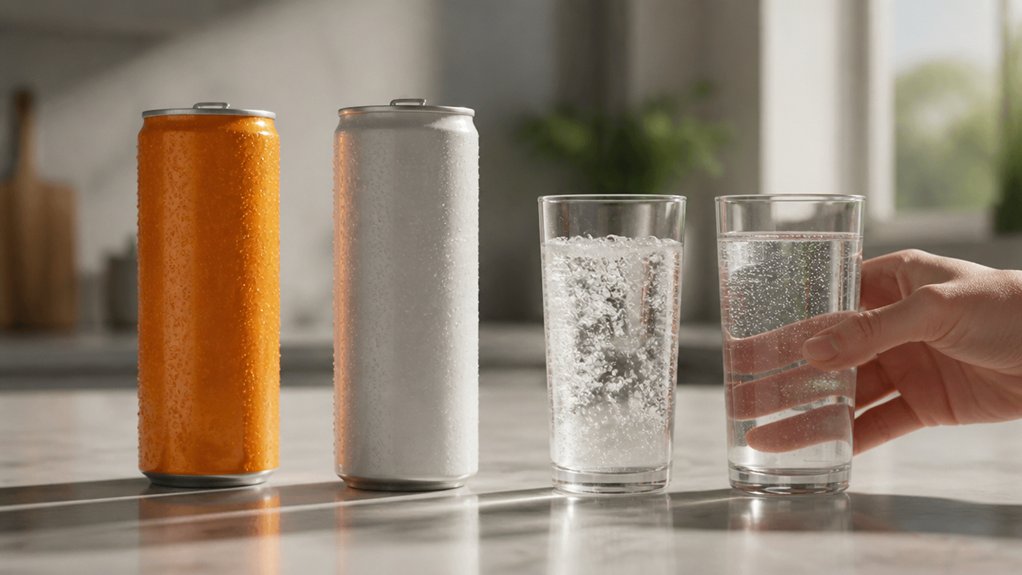
To compare energy drinks that may cause fewer jitters or a sharp drop in alertness, start with the caffeine amount per serving and check how many servings the container holds. Then compare products with similar caffeine doses; a lower dose may suit you better, but individual sensitivity varies. Note whether caffeine comes with sugar, noncaloric sweeteners, or ingredients such as L-theanine. Evidence that added ingredients prevent a crash remains limited, so don’t treat them as guarantees. Consider how quickly you drink the beverage and whether you’ve eaten, since both can affect how caffeine feels. Flavor variety matters, too: a taste you enjoy may help you avoid drinking more for satisfaction. Brand reputation can guide your shortlist, but prioritize transparent sourcing and consistent quality over marketing claims. Track your response and choose accordingly.
What Should You Check on the Label?
Before you buy, check the caffeine amount per serving and the number of servings in the container, since one can may hold more than you expect. Add up caffeine from coffee, supplements, and other sources to judge the product’s total contribution. Review the ingredient list for added sugars, sugar alcohols, and sweeteners; compare grams per serving rather than relying on claims such as “natural” or “clean.” Look for clearly stated amounts of functional ingredients, such as electrolytes or B vitamins, and don’t assume a long list means an effective dose. Check allergen statements and serving-size directions, too. Flavor profiles can hint at sweetener choices, but taste doesn’t reveal sugar content. Finally, consider packaging sustainability: recyclable materials and clear disposal instructions help you assess the product’s environmental impact.
When Should You Drink Caffeine for Better Sleep?
The label tells you how much caffeine a drink contains; timing helps you judge how it may affect sleep. Caffeine can remain active for hours, and its half-life varies, so a late serving may delay sleep or reduce its quality—even when you feel tired.
For better rest, set a caffeine cutoff based on your bedtime. Many people benefit from avoiding caffeine for at least six hours before sleep; you may need a longer window if you’re sensitive or notice disrupted rest. Count caffeine from all sources, including coffee, tea, chocolate, supplements, and energy drinks. Check serving size and added caffeine ingredients, since a can may contain more than one serving.
Good caffeine timing complements Sleep hygiene, but it can’t replace a regular sleep schedule and a calm, dark bedroom. Track intake and sleep to find your personal cutoff.
Who Should Be Cautious With Energy Drinks?
If you’re pregnant, sensitive to caffeine, or managing a heart condition, high blood pressure, anxiety, or sleep problems, check with a health professional before using energy drinks. Caffeine can raise heart rate and blood pressure, worsen anxiety, and disrupt sleep; effects vary with dose and individual sensitivity.
Check the label for total caffeine per container, including caffeine from guarana, yerba mate, or tea extracts. These sources still contribute caffeine, even when the front label emphasizes “natural” ingredients. Watch for added sugar and stimulant blends, too, and don’t combine energy drinks with caffeine pills, pre-workout products, or alcohol.
Consumer awareness helps you assess Health risks and avoid accidental overconsumption. If you take medication or have a chronic condition, ask your clinician about ingredients and safe limits. Stop use and seek care for severe or unusual symptoms.


