

Will sommelier approved non alcoholic pairings be all the rage next year? In 2027, premium zero-proof pairings give you the acidity, texture, and aromatic progression of a fine-wine flight without alcohol. A sommelier matches each pour to a dish’s weight and dominant flavors, using de-alcoholized wines, botanical infusions, or fermented drinks with balanced sweetness and clean finishes. Flights may progress from saline aperitifs to textured ferments and bitter digestifs. Expect to pay $45–$120 or more, depending on sourcing and service. The details reveal what makes these pairings exceptional.
What Makes a Zero-Proof Pairing Feel Special?
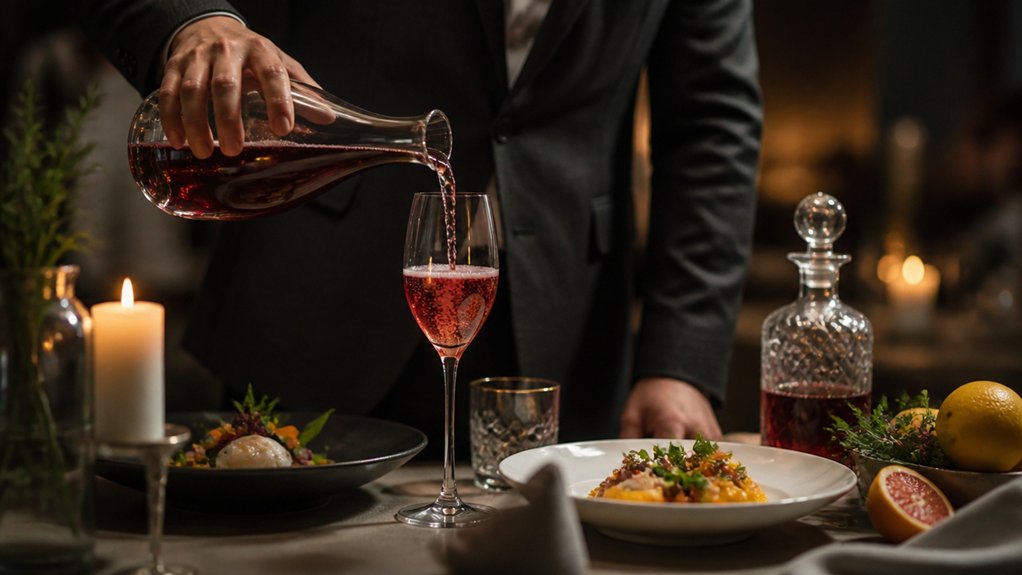
A zero-proof pairing feels special when it does more than replace alcohol: it brings balance, texture, and aromatic contrast to the food. You notice the difference when acidity cuts through richness, tannin-like grip meets fat, or measured sweetness tempers heat without masking flavor. A skilled maker builds these effects through layered botanicals, fermentation, extraction, and precise carbonation. Craftsmanship evolution has expanded the palette beyond simple juices and syrups, giving you drinks with structure, length, and a deliberate finish. Cultural influences also shape the glass: tea traditions, spice blends, bitter herbs, and fermented ingredients can echo a dish’s origins or create a thoughtful counterpoint. When you taste each component in sequence, the pairing feels composed rather than substituted. You’re not missing alcohol; you’re experiencing a distinct, technically considered relationship between drink and food.
Why Are Premium Non-Alcoholic Pairings Growing?
As diners seek more control over what they drink, premium non-alcoholic pairings are gaining ground in restaurants and at home. You’re seeing demand rise as guests prioritize health, moderation, religious observance, and clear-headed socializing without accepting a second-tier experience. Restaurants respond with dedicated lists, while producers invest in fermentation, botanical extraction, and precise acidity to deliver complexity without alcohol. Artisanal ingredients give these drinks distinctive provenance and flavor, and Luxury branding signals craftsmanship rather than compromise. Younger consumers also expect menus to reflect varied preferences, making inclusive options a practical business decision. For you, the appeal extends beyond abstinence: carefully designed beverages offer sensory detail, transparent sourcing, and occasion-worthy presentation. As quality improves and availability expands, premium choices become easier to trust, recommend, and incorporate into everyday dining and celebrations.
How Do Dealcoholized Wines Pair With Fine Dining?
When you pair dealcoholized wine with fine dining, match its acidity, sweetness, tannin, and body to the dish—not simply its grape variety. With oysters or crudo, choose a crisp, mineral white; its bright acidity cuts richness and refreshes the palate. For roast poultry, select a fuller-bodied white with restrained sweetness, while a structured red can complement mushrooms or charred vegetables. Because removing alcohol can thin texture and mute aroma, assess the wine’s finish alongside the sauce, seasoning, and cooking method. Don’t assume residual sugar signals poor quality: it can restore balance, though artificial sweeteners may leave an incongruous aftertaste. Serve sparkling styles with delicate courses, but distinguish natural mousse from carbonation techniques that create larger, less persistent bubbles. Your sommelier can calibrate temperature and pour size to preserve nuance throughout the meal.
Where Do Botanical Drinks Shine on the Menu?
You’ll find botanical drinks especially effective with seafood, where citrus notes sharpen salinity without masking delicate textures. With herb-driven courses, match the drink’s dominant botanicals to the dish’s aromatics to maintain precision and balance.
Seafood And Citrus
With their saline delicacy and bright acidity, seafood and citrus give botanical drinks a natural point of entry. You can pair a chilled, lightly bitter botanical aperitif with oysters: its restrained quinine-like edge sharpens brine without masking sweetness. For crudo dressed with lime, choose a dry, citrus-led blend with gentle tannin; it can echo the fruit’s lift while giving delicate fish a firmer finish. Match richer scallops with a sparkling, saline drink, whose fine bubbles refresh the palate between bites. Keep sweetness low: excess sugar can flatten acidity and exaggerate fishiness. Sustainable sourcing matters, too; responsibly harvested botanicals and seafood reinforce a menu’s integrity. Cultural influences can guide your choices, from yuzu with Japanese preparations to bergamot alongside Mediterranean shellfish. You’ll find the strongest pairing respects the dish’s texture, seasoning, and finish.
Herb-Driven Courses
Beyond seafood, botanical drinks show their range alongside herb-driven courses, where aroma and bitterness can amplify fresh, savory flavors. With your menu, match the drink’s aromatic profile to the herbs’ intensity: a crisp, gently bitter infusion can sharpen basil, parsley, or chervil, while a deeper, resinous blend can meet rosemary, thyme, or sage. Herbal infusions built from green tea, verbena, or fennel offer structure without masking delicate sauces. For grilled vegetables and herb-forward grains, choose Aromatic botanicals such as juniper, coriander seed, or bay, calibrated for restrained warmth rather than perfume. You’ll get the best pairing when acidity refreshes the palate and tannin-like grip supports oil and char. Serve these drinks cool, not icy, so volatile aromas remain legible through each course.
How Do Fermented Zero-Proof Drinks Add Depth?
Fermented zero-proof drinks give you layered notes shaped by culture, substrate, and aging. Their natural acidity and tannin sharpen structure and clarify food pairings. You gain measured complexity without alcohol.
Layered Fermentation Notes
Fermentation gives zero-proof drinks the layered acidity, savory depth, and aromatic complexity that make them compelling pairings. When you taste a cultured tea, lacto-fermented fruit, or koji-based infusion, you encounter successive aromas rather than a single dominant note: floral lift, ripe fruit, then earthy or umami-rich resonance. Carefully controlled progression techniques shape those transitions. Producers select specific cultures, manage temperature and oxygen, and stop fermentation at a precise point to preserve balance and definition. You’ll also notice Cultural influences in the choice of substrates and methods, from kombucha traditions to grain-based ferments. For a sommelier, these details matter because they let a drink echo a dish’s roasted, cured, or fermented elements without imitating wine. Choose expressions with clear aromatic evolution and a finish that remains composed beside complex food.
Natural Acidity And Tannin
Aroma gives a fermented zero-proof pairing its first impression; acidity and tannin give it structure. When you assess a cultured tea, verjus blend, or fermented fruit infusion, look for natural acids that sharpen the finish without making the palate feel austere. Malic and lactic notes can preserve fruit brightness, while measured acetic lift keeps richer dishes from feeling heavy. Tannin contributes grip: tea leaves, grape skins, and certain botanicals create a drying sensation that echoes the texture of red wine. You’ll want tannic balance, not harshness; excessive extraction can dominate delicate food, while too little leaves a pairing flat. Match acidity to a dish’s fat and salt, then calibrate tannin against its protein and texture. That structure lets you evaluate each sip with precision and confidence.
Complexity Without Alcohol
Depth in a zero-proof pairing comes from layered processes, not alcohol’s warmth. When you assess a fermented drink, look for controlled microbial activity: yeast and bacteria transform sugars into acids, aromatic esters, and savory compounds. These reactions create tension and length, giving your palate more than simple sweetness.
Kombucha, water kefir, and fermented teas can contribute subtle funk, brisk acidity, and evolving aromatics. Producers may also blend botanicals, tea tannins, or fruit extracts to shape structure and align a drink with a dish. You’ll notice the strongest pairings balance these elements rather than mask them.
Read labels closely. Artificial sweeteners can leave a persistent finish, while restrained flavor enhancement preserves ingredient definition. Choose drinks with measured acidity, clean fermentation, and a finish that develops alongside food, not one that overwhelms it.
Which Zero-Proof Drinks Pair Best With Each Dish?
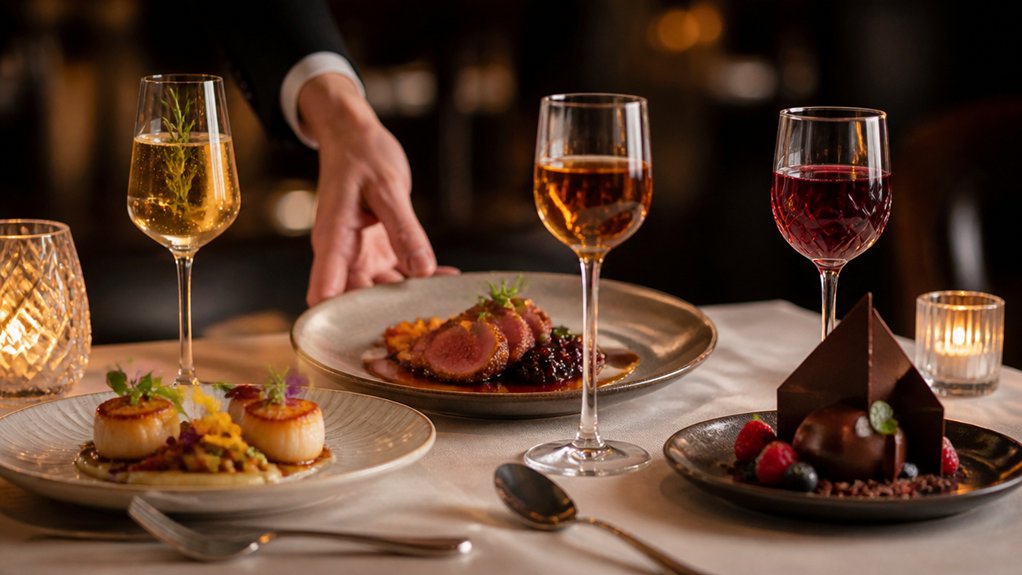
The best zero-proof pairing matches a dish’s weight, richness, and dominant flavors without overwhelming them. With oysters, serve a saline, citrus-driven sparkling tea; its acidity sharpens brine while bubbles refresh your palate. For roast poultry, choose a dry, lightly tannic red-grape or hibiscus blend that complements browned skin without masking delicate meat. Pair fatty fish with a crisp, herbal aperitif to cut richness, and match grilled vegetables with a smoky, fermented tea that echoes char. For braised beef, pour a structured, dark-fruit infusion with restrained bitterness and enough body to meet the sauce. With dessert, calibrate sweetness: tart berry kombucha suits chocolate, while floral, low-acid tea flatters stone fruit. Consider Craftsmanship stories and Cultural influences when a drink’s ingredients or fermentation method reinforce the dish’s culinary identity.
How Do You Choose Premium Non-Alcoholic Drinks?
Choose premium non-alcoholic drinks by scrutinizing their ingredients, production methods, and balance—not just their packaging or price. Read labels for recognizable botanicals, fruit, tea, and acids; check whether sweetness comes from juice, sugar, or concentrates. You’ll want a defined structure: acidity, bitterness, aroma, and finish should feel integrated rather than syrupy or one-dimensional.
Ask how producers build complexity. Vintage techniques, such as barrel aging, fermentation, or careful extraction, can add tannin and depth, though craftsmanship matters more than method alone. Look for Sustainable sourcing, transparent provenance, and responsible processing; these signal attention to quality across the supply chain. Then assess the drink at serving temperature, since chill can mute aromatics and expose imbalance. Compare a small pour with water or food nearby, and choose the bottle whose flavor remains precise, layered, and composed.
How Can Restaurants Make a Zero-Proof Flight Memorable?
A memorable zero-proof flight tells a deliberate story through contrast, progression, and precise pacing. You can open with a bright, saline aperitif, move into a textured fermented pour, then finish with a bitter, aromatic digestif. Calibrate sweetness, acidity, tannin, and temperature so each glass resets the palate rather than repeating the last.
Let Cultural influences guide ingredient choices and narrative: a tea’s origin, a regional botanical, or a fermentation tradition can give each course context without turning the flight into a lecture. Match each pour to the dish’s weight and dominant flavors, and explain the pairing in a concise, specific note.
Beverage presentation matters: choose glassware that concentrates aroma, serve at a deliberate temperature, and use measured pours. Your sequence should feel composed, not merely alcohol-free, with every progression earning its place.
What Do High-End Non-Alcoholic Pairings Cost?
Because premium zero-proof pairings require the same sourcing, preparation, and service as wine flights, expect pricing to reflect more than the liquid in each glass. A restaurant may charge $45 to $120 for a multi-course flight, with top-tier programs exceeding that range when rare teas, fermented botanicals, or dealcoholized wines anchor the menu. You’re paying for exclusive sourcing, skilled preparation, glassware, and a sommelier’s work matching acidity, tannin, sweetness, and texture to each dish. Luxury branding can raise prices, but it doesn’t guarantee better balance or provenance. Before ordering, check whether the quoted price covers every course, pours are full or tasting-sized, and pairings change seasonally. Compare the flight’s ingredients and technique with its price; a carefully composed sequence should offer distinct contrasts, not merely expensive labels or elaborate descriptions.


