

In 2026, you’ll find drink menus moving beyond citrus and sweetness toward savory, fermented flavors. Miso, mushrooms, tomato, seaweed, and brine bring rounded umami, while fermentation adds tang, aroma, and a softer finish. Rosemary, shiso, dill, and celery leaf lift these earthy notes with fresh botanical character. Bartenders balance salt and richness with acidity, gentle sweetness, and lively texture, from sparkling tea to silky foams. The result feels layered, food-friendly, and versatile, with plenty more to discover.
What Are Umami Drinks?
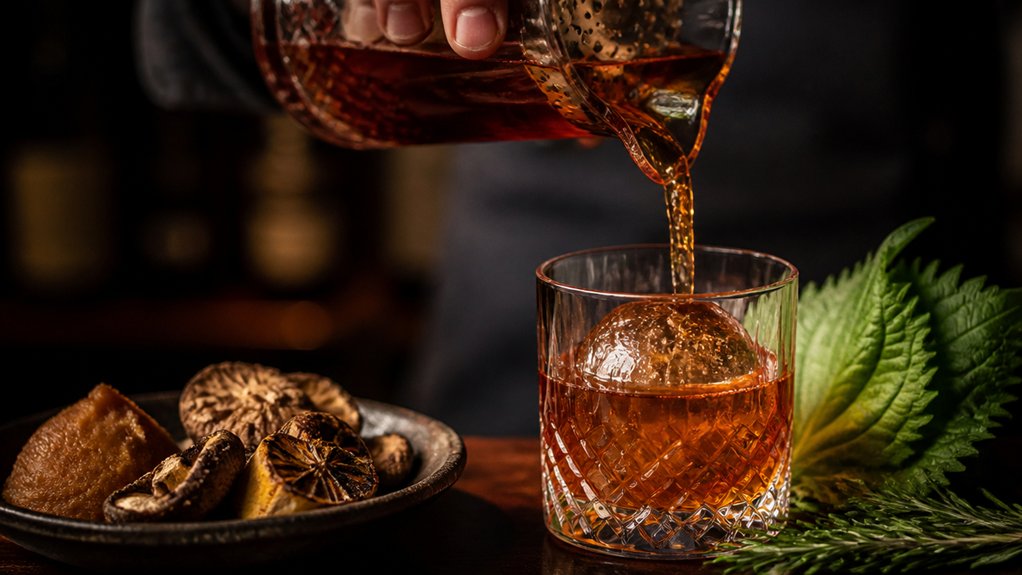
Umami drinks bring savory depth to the glass, using ingredients like miso, tomato, mushrooms, seaweed, or soy alongside citrus, herbs, and spirits. You’ll taste a rounded, mouthwatering quality that adds dimension without turning a cocktail into soup. A splash of tomato water can sharpen a martini; a touch of miso can lend a mellow, salty finish to a sour. Seaweed brings mineral notes, while mushrooms offer earthy richness. Thoughtful flavor layering keeps these ingredients in balance: pair their savory edges with bright acidity, gentle sweetness, or aromatic bitters. Botanical infusions can carry herbal notes through the drink, linking ingredients and spirits with a fragrant lift. You can explore umami in cocktails, zero-proof serves, and broths, adjusting each element until the glass feels cohesive, vivid, and pleasantly savory.
Why Are Savory Drinks Gaining Popularity?
As drinkers seek bolder flavors and more food-inspired experiences, savory drinks are finding a wider audience. You’ll notice them on menus that treat cocktails like dishes, balancing bright acidity with earthy, saline, or gently bitter notes. Tomato, olive brine, celery, mushrooms, and aromatic herbs bring familiar ingredients into unexpected pours, making each sip feel layered and satisfying.
Flavor innovation also gives you more than sweetness to explore. Bartenders pair peppery greens with citrus, or roasted roots with crisp spirits, creating drinks that complement a meal rather than compete with it. Thoughtful Ingredient sourcing matters, too: seasonal produce and regional botanicals lend freshness, character, and a sense of place. As you look for drinks with depth and culinary relevance, savory profiles offer a distinctive alternative to conventional fruit-forward choices.
What Does Fermentation Add to Cocktails?
When you add fermented ingredients like kombucha, miso, or lacto-fermented fruit, you build layered, savory-sour flavor. Their natural acidity brightens a drink without relying on citrus alone. You’ll also get a softer texture and a lively, rounded finish.
Deeper Flavor Complexity
Fermentation gives cocktails more than a tangy edge: it builds layered acidity, savory depth, and subtle fruity or funky notes. When you sip a koji-seasoned martini or a kombucha highball, you’ll find flavors that unfold rather than simply hit sweet or sour. Fermented pineapple can bring ripe, almost floral aromas; miso can lend a quiet, lingering savoriness. These profiles give bartenders new ways to make familiar spirits feel distinctive, without burying their character. You can pair botanical infusions with fermentation techniques to draw out complementary notes: juniper meets cultured grain, while citrus peel finds a counterpoint in fermented tea. In 2026, that layered approach helps your drink feel crafted and contemporary, with each ingredient contributing a clear note to a more complex whole.
Natural Acidity and Texture
Beyond flavor, fermentation gives cocktails a softer, more integrated acidity and a texture that fresh citrus alone can’t provide. When you add kombucha, tepache, or a lacto-fermented fruit brine, you bring rounded tang, gentle effervescence, and a subtle savory edge. Those elements help your drink feel lively without turning sharply sour.
Fermentation also builds body. A cultured syrup or clarified fruit ferment can lend a silky, lightly pulpy weight that carries botanicals across your palate. You’ll notice how acidity shifts from a quick citrus snap to a lingering, mellow brightness, while fine bubbles lift each sip.
For 2026 menus, this balance supports Botanical synergy: pair fermented pineapple with herbaceous gin, or apple kvass with earthy amaro. Thoughtful Flavor layering lets you tune tartness, texture, and aroma together, creating cocktails that taste composed, not merely sour.
How Do Miso, Mushrooms, and Brine Add Depth?
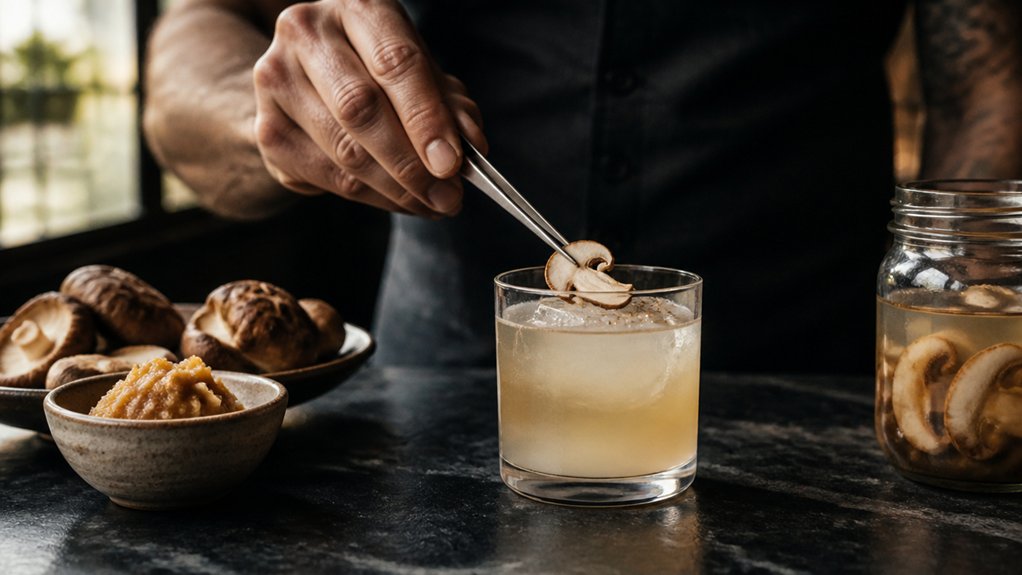
You’ll taste miso’s fermented depth in a savory, lingering finish. Mushrooms bring earthy umami, adding a rounded note to modern cocktails. A touch of brine sharpens the mix, balancing richness with a bright, saline snap.
Miso’s Fermented Depth
A spoonful of miso can give a drink savory depth, soft salinity, and a lingering, rounded finish. In 2026, you’ll find bartenders using this fermented paste to make cocktails taste more layered, not simply saltier. White miso brings gentle sweetness and a mellow, creamy note; red miso adds a bolder, longer-aged savor. Whisk a small amount into warm water or syrup first, then strain it into your drink for a smooth texture and even seasoning. These Fermentation techniques let you balance miso’s richness with citrus, crisp spirits, or a touch of honey. Pair it with Botanical infusions, such as shiso or chamomile, and you’ll create contrast without masking its character. Start with a measured dose: miso’s concentrated flavor can quickly take over a delicate build.
Mushrooms’ Earthy Umami
When mushrooms meet miso and brine, a cocktail gains earthy umami, savory depth, and a finish that lingers without turning heavy. You can build that profile with a restrained mushroom infusion: dried shiitake brings concentrated savor, while fresh maitake adds a softer, woodland aroma. Stir in a small measure of miso, and its fermented richness links the mushroom’s deep notes to the spirit’s botanicals. A measured splash of brine can sharpen the blend, but let the mushrooms lead; too much salt will crowd their delicate earthiness. This Botanical synergy feels especially current on 2026 menus, where Flavor innovation favors layered, culinary cues over sweetness alone. Try the combination in a gin martini or a clear, spirit-forward stirred drink. You’ll find each sip savory, aromatic, and quietly complex.
Brine’s Bright Balance
Brine gives miso and mushrooms a bright counterpoint, lifting their savory depth with a clean, saline snap. In your glass, a measured splash of olive or caper brine sharpens miso’s fermented richness and draws out mushrooms’ earthy, almost toasted notes. The result feels layered, not heavy: salt wakes the palate, while acidity keeps each sip crisp and inviting.
You can build that balance with cucumber pickle liquor, kombu brine, or a restrained dash of soy. Pair these with Herbal infusions such as shiso, thyme, or lemon balm to add lift without masking umami. Botanical extracts can contribute precise citrus, pepper, or floral accents, helping you tune the finish. As savory drinks gain menu space, brine offers a practical bridge between fermentation, freshness, and refreshment.
Which Botanicals Suit Savory Drinks?
Savory drinks call for botanicals that bring freshness, depth, or a hint of bite without overwhelming the glass. You’ll find that rosemary and thyme lend resinous, garden-fresh notes, while dill and fennel offer a cooler, anise-like lift. Celery leaf, shiso, and coriander seed add green, citrusy edges that feel especially current on 2026 menus. For earthy complexity, reach for bay, sage, or a restrained touch of juniper; each can echo fermented ingredients without masking their character.
Botanical infusions let you control intensity, whether you steep herbs briefly or build a fragrant tincture. Think about texture and aroma as well as taste: a cracked peppercorn brings warmth, while citrus peel sharpens a leafy profile. With thoughtful flavor harmonization, you can pair botanicals with mushrooms, tea, or cultured vegetables and give every sip a clear, distinctive identity.
How Do Bartenders Balance Salt, Sour, and Sweet?
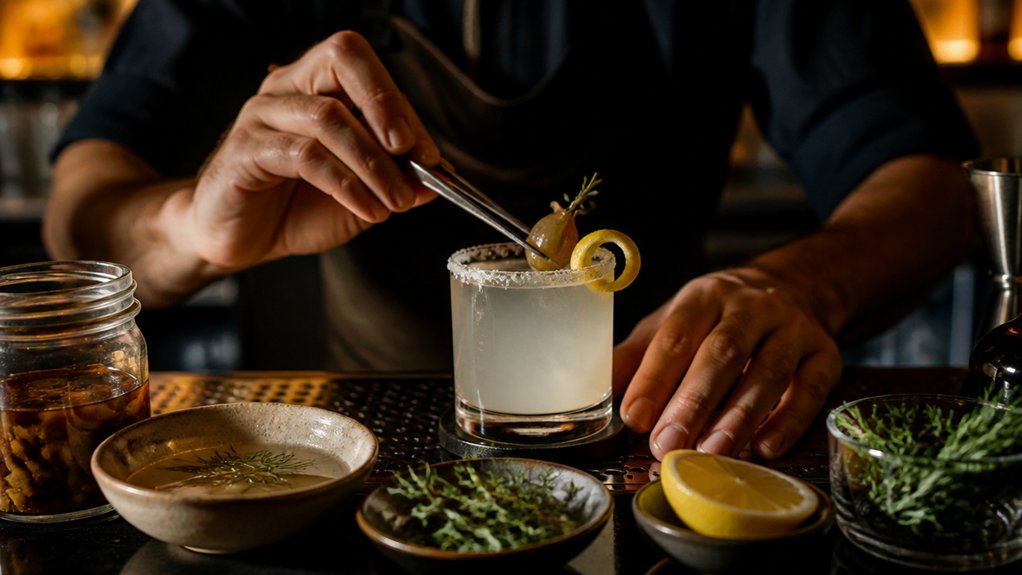
Salt, sour, and sweet work best in balance, each sharpening the others without taking over. When you build a savory drink, start with a measured saline solution or a few drops of brine; salt can lift tomato, celery, and seaweed notes, but too much flattens aroma. Add citrus or verjus for a clean, bright edge, then sweeten carefully with honey, agave, or a restrained syrup. Taste after each addition, since acidity can make sweetness seem quieter, while salt can make both feel more vivid.
Botanical infusions bring another layer: rosemary, shiso, or coriander can connect savory ingredients to the base spirit. Use Flavor layering to give each element a clear role, not a louder voice. You’ll get a drink that feels crisp, rounded, and confidently complex, with umami in focus.
How Does Texture Shape Savory Drinks?
Texture can make a savory drink feel crisp, silky, or satisfyingly substantial before its flavors fully register. You notice it in the first sip: fine bubbles lift a briny tomato highball, while a clarified mushroom infusion lands clean and light. For more body, bartenders use aquafaba, oat cream, or a small measure of olive oil, building a satin-like finish without burying herbal notes. A saline foam or crisp vegetable garnish adds contrast, giving each sip a distinct rhythm.
In 2026, thoughtful ingredient sourcing shapes these textures, from local seaweeds to seasonal roots and grains. You can taste how processing matters, too: fermentation brings gentle fizz and a rounded, savory feel. Flavor pairing works best when texture supports the ingredients—silky with earthy miso, sparkling with sharp pickle brine—so complexity feels deliberate, not heavy.
Where Do Zero-Proof Drinks and Food Pairings Fit?
When a meal calls for more than a cocktail, zero-proof drinks can pair with food just as thoughtfully. Match a chilled, savory botanical infusion with oysters, citrus-dressed greens, or delicate fish; its herbal lift can echo fresh aromatics without overwhelming brine or sweetness. With roasted mushrooms, aged cheese, or miso-glazed vegetables, choose a drink built around tea, verjus, or fermented ginger. Gentle bitterness and acidity cut richness, while umami deepens each bite. You can also use carbonation to refresh your palate between courses, or serve a warm, spiced infusion alongside braised dishes. These pairings give every guest a considered place at the table, whether they’re skipping alcohol for the evening or seeking health benefits. Focus on balance, temperature, and intensity, and your zero-proof pour feels composed—not like a substitute.
What’s Next for Umami Drinks?
Umami drinks are moving beyond mushroom broth and miso into brighter, more layered territory. You’ll find chefs and bartenders pairing tomato water, seaweed, and fermented chile with crisp citrus, orchard fruit, and sparkling tea. Botanical infusions of shiso, lovage, or celery leaf add green lift, while koji and black garlic bring depth without heaviness. The next wave favors contrast: saline notes meet tart berries; toasted grains meet fragrant herbs. For your menu, build Flavor harmonization around one savory anchor, then balance it with acidity, aroma, and texture. A dash of verjus can sharpen a kombu martini, while pear softens a shiitake highball. Expect more low- and no-proof serves, too, where savory ingredients lend structure and a lingering finish. You’ll taste complexity, not simply salt or funk.


